All posts by yodamo

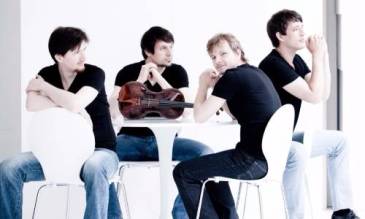
An Interview with Bartosz Zachlod

a1ib000000AICs6AAH-500x300.jpgHello Bartosz, so where ya from & where ya at, geographically speaking?
I was born in Poland and have studied in Vienna. Presently, I live in Göttingen. But this is just technically speaking, as I am there just approx. one week a month, the rest of the time I am traveling across the Europe and abroad, active as a musician, mostly as a member of the Apollon Musagete Quartet.

When did you first realise you were musical?
As a child, I have spent a lot of time building simple musical instruments. I have played them along with already existing ones. O played from hearing every known and rememberd songs. And so my mother thought it would be good to start a regular lessons.

download.jpg

What instruments do you play, & which do you consider as your forte?
I am 33 now and have been playing the violin already 26 years so it is more than enough time to consider violin and everything around as my main interest. I played also a piano quite good and a electric guitar for a while in the past, but it is the violin which was always my primary focus.

Can you tell us about the Apollon Musagete Quartet?
We are four Poles, we have formed our group in Vienna and after winning one of the most prestigious music competition in Munich are now traveling extensively throughout the Europe, Asia and America to share our musical ideas with a public worldwide.

2245_2902_120603_Apollon_nn.jpgHow do you choose the numbers for your repertoire?
As a string players, we are extremely lucky to have an extraordinary repertoire counting of never ending masterpieces. There are always periods of time when you have particularly strong interests to specified styles which are changing with time to another areas. This keeps freshness in your mind and also allows you to approach different types of music always with a background and experience of a music played before. There is always a private list in your head of works you would like to play in the nearest future. As our interests are rather vast, there is always polish and slavic music at our music stands accompanied with strong classical and romantic core and a modern music.

You have played all across the globe, which have been your top three performances?
I would name Carnegie Hall in New York, Concertgebouw in Amsterdam and the tour with Tori Amos in Europe and USA, it was quite new and exciting experience.

What does Bartosz Zachlod like to do when he’s not being musical?
I like to read. Especially, when I can focus on it more than just a short while, so that I can really get into what I am reading. My second passion are instruments. I have a small collection of instruments and bows. I made also a violin maker course once in Munich which gave me some basics that I now can spread and practise on. It was always my big curiosity how the violin and it’s part are made and how can they influence the sound of the violin.

What is it about performing live that makes you tick?
That it is not 100% predictable what will exactly happen during the performance. You have of course everything planned, but you also react to what is being developed. You are able to reach the forces that are not to achieve while you are practising at home. It is because you know that it is this very moment when you stand at the stage to communicate with a public.

amq_copy_detail_view.jpg

Can you tell us about your Edinburgh performances : where & when & what?
We will perform at Queen’s Hall on Tuesday 8th of August 2017… The program will include works of Puccini – Crisantemi, Mozart -String Quartet in C K465 ‘Dissonance’ and Grieg- String Quartet in G minor

What will Bartosz Zachlod be doing for the rest of 2017?
I have still many festivals ahead, also recitals, solo performances with orchestras and a CD recording. So the schedule is, as usual, quite busy. In my private life, I will be a father for the second time and I am looking very much forward to this small revolution at home also.
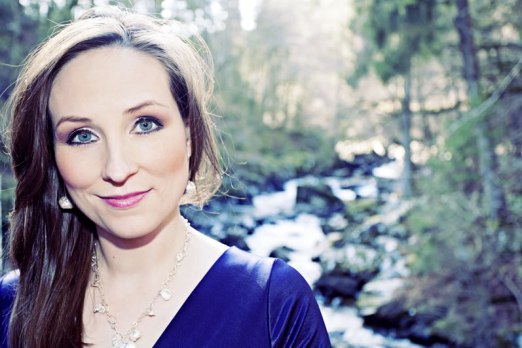

An Interview with Julie Fowlis

julie-2012-2.jpg

Hello Julie, so where ya from & where ya at, geographically speaking?

I’m a Hebridean and Highland mix! Originally from North Uist, but now based near Inverness.

When did you first realise you were musical?
I’ve never really thought about it. I suppose looking back, my sister and I would memorise entire film scripts and countless songs then endlessly regurgitate them to anyone who would listen. I’d also regularly fib to my chanter teacher that I could read music when I couldn’t – I wasn’t found out for years because I could memorise tunes very quickly, so maybe I always had an ear for music.

What instruments do you play, & which do you consider as your forte?
Ah – this is a tricky one. I started off playing chanter (pipes) and piano, before moving onto oboe and cor anglais at University. But I have ended up spending most of my time singing. And I just made my ukulele debut on our new album. Maybe that will be the new thing….

What for you makes a good song?
Strong melody, a great story, and feeling.

How musical is the Gaelic language?
Incredibly musical. It would require an essay to answer this one fully.

You have played all across the globe, which have been your top three performances?
It’s really hard to choose. Well, three memorable shows of late – singing Joni Mitchell songs to a sold out audience at the renowned Celtic Connections Festival, getting to sing Hearts of Olden Glory with Runrig live in Denmark at Tonder festival last year, and singing a Galician song for the first time just last week in Spain. I think for me – they stand out because the audiences were so appreciative. It makes such a difference.

Where do you get your songs from?
Family, friends, contemporaries and archive recordings.

What is it about performing live that makes you tick?
The feeling of sharing something, of connecting to people through music.

What does Julie Fowlis like to do when she’s not being all musical?
Being outside! Rowing, swimming, running, cycling. In any weather. And most of all, being with my family.

fowlis2-1030x682

Can you tell us about your Edinburgh performances : where & when & what?
August 26th, Queen’s Hall. A special preview of our brand new album material.

What will Julie Fowlis be doing for the rest of 2017?
Performing in the US, England, Scotland, and some TV work in France. And releasing a new album on November 3rd!


Julie will be gracing Edinburgh with her music

August 26th, The Queen’s Hall

An Interview with Angus Munro

IMG_5191Hello Angus, so where ya from & where ya at, geographically speaking?
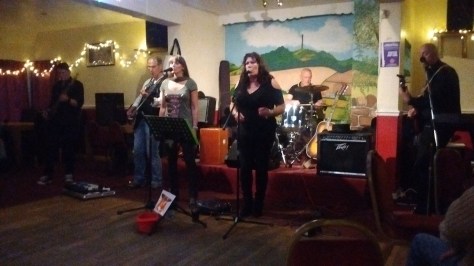
I’m originally from London and I live in Edinburgh.

When did you first realise you were musical?
Probably being told off for playing the xylophone too loud and too much during a Nativity play at primary school.

You have something of a multi-faceted 4-octave vocal range that can break glass. Is this natural or has it taken some training?
A mixture of both I think. I’ve always been able to hit high notes but it’s a muscle and an instrument like any other that requires practice and proper care.

The Mumble has just got your EP, Mirror Man. Where & how was it recorded?
The band and I recorded it with Tony Doogan at Castle of Doom in Finneston, Glasgow over a couple of months.

Can you give us a brief outline as to the contents?
I wanted to write a record that explored the different ways we can deal with loss, be they productive and helpful or self-destructive.

What does Angus Munro like to do when he’s not being musical?
I’m big into fantasy books and am currently reading The Lady of The Lake by Andrzej Sapkowski. I’m also a fan of podcasts – true crime ones in particular.

What for you makes a good song?
Personally, I really go for a song that get’s to the chorus within the first 30 seconds of a track. If something is well written lyrically and melodically and you can tell that a lot of care has gone into it, that’s a winner right there.

You’re just about to play the Hug and Pint in Glasgow on Wednesday 28th June & at Sneaky Pete’s in Edinburgh on Thursday 29th June. It it easy to transfer the studio sound into live performance?
These songs started out live months before we took them into the studio so it’s certainly easier than working the other way around.

What does the rest of 2017 hold in store Angus Munro?
I’m playing Mugstock Festival on 28th July and am planning to go back into the studio at the end of the year. Before that happens though, I’ll be gigging a lot with the band so keep an eye out for shows later in the year!


Angus will be performing @

The Hug and Pint, Glasgow , Wednesday 28th June

Sneaky Pete’s, Edinburgh. Thursday 29th June.

Haddstock

Haddington

Various Venues

24th June

IMG_20170624_223449407
Aberfeldy

A few years ago now, about a decade, I remember seeing Riley Briggs arriving back on London Road, Edinburgh, guitar slung over his shoulders, fresh from playing South by South West festival in Austin, Texas. His band, Aberfeldy, were sugar coating country music with Celtic crystals & the final result was something both swaggeringly listenable & imminently sellable. Then the band fell by the wayside at the end of the noughties until suddenly they turned up on the bill of Haddstock 2017, a one-day music festival spread throughout ten venues in the capital market town of East Lothian, Haddington. The brainchild of Rebecca Brady, she’d leapt off the deep end into a pool of confident musical frolickry, & pulled the whole thing off with aplomb.  A resident of Haddington myself, I was rather surprised to witness Haylee G’s ‘Devils in Skirts’ (read interview here) in procession through town to their gig at Jo’s Kitchen, wearing animal masks & playing the Proclaimer’s ‘500 Miles.’ The faces on the folk at the bus stop were class. A couple of hours later, while nipping out for a Chinese, I saw Aberfeldy’s Riley & his bass-player stalking through town on what was probably some very important rock n roll business, & I’m like, this is real, this is actually happening, I’d best tell the wife to get changed, we’re going out.

IMG_20170624_211519986
The Banjo Lounge 4

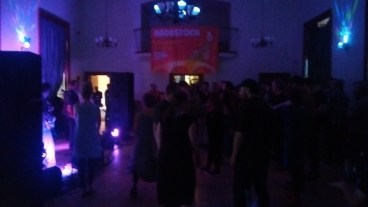
By evening me & the wife were ready to rave, & arriving at the Town House, the festival’s main event was well under way. It was all taking place in the Georgian assembly rooms, built for music & dancing, where in the balcony above the polished floorboards a chamber orchestra would once play. These days the band has dropped to eye-level, & the sounds are amplified through amps & speakers, & thus the high-octane energy of ‘The Banjo Lounge 4’ was ripping into our ears & tearing a drag-strip down our spines to our feet, which were moving in perfect synchronicity to the band’s ridiculously bouncy versions of songs we moderns love to love. I Feel Love, Song 2, Viva Las Vegas, I’m Sexy & I know it… you get the picture, all of which were given an interpretive banjo twang which got us all hopping about on invisible pogo-sticks.

IMG_20170624_221139541
Thistle Hurt

Me & the wife then thought, we are at a festival, supposedly, so lets check it out, & took a little amble through Haddington centre to the Railway, whose upstairs function suite was playing host to a pumpin’ band, straight from the eighties halycon rock era of Heart, Stevie Nicks & Fleetwood Mac; whose two female vocalists tossed up a harmonious layer of snowy vocals onto the mountainous rock-craft of their band. Yes, we were happy we went along to see Thistle Hurt.

IMG_20170624_211552802

Returning to the Town House, Aberfeldy’s rolling-through-the-countryside-on-a-sunny-day, melodically ambient pop was lighting up the stage, with Riley being joined up front by Chris Bradley to deliver a classic stream of their hits. One-by-one we noticed that people were singing along to them with furious passion & lip-synch accuracy, & it slowly dawned on the wife that Riley was some kind of Biblical patriarch with all his tribe out to listen to him preach. His mother, brother, father, daughter, grandma & great-aunt were at least some of the family in the room, who mixed with the local contingent into a highly appreciative & – once the disco encores kicked into place – groovetastic audience.

haddstock-fb-event-LST242623.jpg

‘The response from the acts & the public & the venues for this inaugural Haddstock has been amazing,’ said Rebecca, who knew her headliners personally & had instigated the coup to get them reformed for the night. Hopefully Aberfeldy have a taste for it again, & with a decade of life experience in the bank, maybe a few new cracking numbers waiting to be crafted into life.

Reviewer : Damo Beeson Bullen

An Interview with Rosie Houlton

RosieHoultonBlackDress.jpgHello Rosie, so where ya from & where ya at, geographically speaking?
Hey Mumble! Well I was born and bred in the land of roundabouts (the beautiful Milton Keynes) in Buckinghamshire and I loved it so much there I decided to move Edinburgh, which is where I now live and call home.

When did you first realise you could sing?

I was a late bloomer. I’d say I didn’t realise I could sing until my early teens. It was my own little secret, I wouldn’t dare sing in front of people. I always wanted to perform from a young age but I actually wanted to be a dancer for a long time – which is HILARIOUS if you’ve ever seen me dance…

You have toured the UK and Europe as a vocalist and actress in musicals, plays, cabaret and concerts. Why have you suddenly decided to go solo?

Well, being your own boss and playing by your own rules is so much fun, if a bit stressful. It’s just me until I hit the stage when I’m joined by my lovely musical director, Douglas Price (who is so awesome I genuinely can’t believe my luck)! I just want to sing what I enjoy singing, say what I want to say, be playful and have fun. I just fancy doing my own thing for a little while. If you want to do what you truly enjoy, you have to start by making it happen on your own, right? At the moment my only choice is to do that solo. No one knows who I am yet and hopefully by the end of August I’ll meet some people who understand me, where I’m coming from and humour me in spite of it. I’m finding myself again but it’s a newer more interesting me and I’d like to share that with people.

This will be your debut show at the Fringe. What have you been led to expect what will happen during the month-long mash-up by other performers?

I’ve actually found people keeping their cards closer to their chests then I thought they would. So I’m currently expecting to see what the minions in my head are showing me and it’s colourful I’ll tell you that! I’ve ordered as many pairs of support pants and eyelashes my bank account will allow. I’m going to put my heart and soul into the experience and let the universe do the rest.

Can you tell us about your act?

I try to bring an element of different styles of music that I enjoy from Musical Theatre to Pop. I’m naturally a lyrical soprano who might sing eight bars of gangster rap, just because. As a person my outer layer is Disney Princess but the core of my onion is a massive chav and yes I’m singing ‘The Girl in 14G’ right now but at 5am you can see me bumping and grinding to old school garage in a warehouse that’s been turned into a nightclub for the night. Cabaret legend Jamie Anderson described my show as ‘The Voice of an Angel, Mouth of a Sailor’ at Cabaret Confidential back in February. So take from that what you will!

What does Rosie Houlton like to do when she’s not being all musical?

I love love love to eat cheese, and travel, preferably at the same time! Japan has had a big effect of my life, which you can find more about in my show. There’s still a lot more places I need to visit and I’m getting through them one pair of sequined sliders at a time. I also spend hours watching videos of fat cats, baby goats and chowchow puppies rolling around.

Storytelling at the piano is a classic art-form, who are your inspirations?

I like to story tell, next to, the piano (haha). There is usually someone talented and amazing sat at it, so I get to watch them safely from afar. You know I’m actually just starting to learn who my inspirations are because putting on my own show is very new to me. I trained in Musical Theatre so obviously I could name some awesome artists who sing and entertain like Christina Bianco, Kristin Chenoweth and Bette Midler, which is the tiniest tip of the iceberg.

I grew up travelling in the circus with Daddy Houlton (Cousin Timoni is his official clown name) and I think that’s where my roots lie in terms of how I set up my stories and I like to say the unexpected. I’m always learning, all the time and I watch a huge amount of stand up and many sitcoms. I love all sorts of humour from the likes of Kevin Hart, Larry David and Katherine Ryan. They’re all completely different but more importantly they all teach you to just be yourself and then find a structure within that which works well for you. I’m never trying to be a stand up. I’m a singer at heart but these people help me to understand comedic storytelling. I could give you a massive list of vocalists who I truly admire but we’d be here for hours.

I would be nowhere without the composers of the songs I use … NOWHERE! It blows my mind how these beautiful people just create these amazing songs. I’ve done a lot of work in helping composers develop new musical theatre so I try to bring in a song or two from writers who aren’t as well known to show off their talents.

Your subject matter, storywise, is a little risque, perhaps. Whyever did you choose this particular route & what do your parents think?

Well I found starting with ‘facts about me’ was a subject I already knew about and a great way to introduce myself to the festival for the first time. I have quite a blunt sassy humour. Although I’m just telling facts about myself because I’m very dry, honest and open, it can be taken as quite risqué which doesn’t really match my cute name and appearance and so people don’t exactly expect it from me. I’m a fan of innuendo but sometimes I don’t leave much to the imagination. I’ve always laughed through my hardships and when I’m telling stories about my personal life, I suppose it just comes out that way. My dad is a circus clown and my mum is a psychic so they’ve got some stories themselves to be fair. They are my best friends and they know me better than anyone else. There’s nothing I could bring up that they don’t already know…

What will Rosie Houlton be doing for the rest of 2017?

I will be doing more ‘Rosie Sings’ Cabaret shows at the Dirty Martini in the Le Monde Hotel here in Edinburgh. I’m also planning on taking my show to Milton Keynes where it all began. You can always see me bobbing about singing at various cabarets at The Ghillie Dhu in Edinburgh and the Corinthian Club in Glasgow. I’ll then be running off to Panto Land to play Princess Jill in Jack and The Beanstalk at Rotherham Civic Theatre this Christmas and New Year (the sailor mouth will be truly locked away for that I promise)! And of course eating cheese whilst travelling.


Rosie will be strutting her stuff this August

@ Fingers Piano Bar

Aug 5-6, 8-13, 15-20, 22-27 (15.10)

An Interview with Pete Macdonald

State-Broadcasters-1

Hello Pete, so where ya from & where ya at, geographically speaking?

Hello! I grew up in a village called Kemnay, which is near Aberdeen. Though, having lived in Glasgow now for 15 years, I probably feel more Glaswegian than Aberdonian.

When did you first realise you were musical?
I’ve loved music for as long as I can remember.  Most of my earliest memories are based around music.  Christy Moore was a particular favourite when I was very small. Apparently I used to sing my own incidental music when I was playing with toys.  To be honest though, I think most people are naturally musical. It often comes down to liking it and being around it when you’re young, then it being part of your life as you get older.

Who were your earliest influences?
I think a huge influence on me personally were The Bhundu Boys.  My dad used to play them a lot when I was young, and I’ve been a fan ever since.  The exuberant, jangly pop they played has had quite a profound effect on my tastes – I can’t resist a Major key!  I can probably trace my love of The Smiths, The Beatles and many others back to Bhundu Boys tapes when I was wee. When Graeme Black and I started the State Broadcasters, our biggest influences were probably Eels, Lambchop, Clem Snide and Sparklehorse

How did forming the State Broadcasters come about?
When I was at University, I had a part time job in the library at the campus.  Graeme worked there too, and we used to chat about music sometimes.  We kept bumping into each other at gigs, and after a while he said he had some songs he was looking to collaborate on.  He played them for me, and I tried adding a few bits and pieces to them, and it all went from there. That was in 2004!

———————-

———————-

The Mumble has just got your new album, & its good, some great tracks. Where was it recorded?
Glad you like it! Thank you.  We recorded it at my old flat in Glasgow.  I was lucky enough to have a bedroom that was large enough to record everything we needed there.  All 3 State Broadcasters albums were recorded there.  It was mixed in a different, smaller bedroom after I moved house.

Each song on the album has a certain lyrical magnitude. Who is the songwriter for the group?
The songwriting is often a bit of a collaboration, but most of the lyrics are by Graeme, with the exception of ‘Braced Against The Cold’, which I wrote.  Graeme left the band during the recording process, sadly.  He’s a great songwriter – we’ll miss him.

State-Broadcasters-6

It it easy to transfer the studio sound into live performance?
Because we largely use acoustic instruments, it’s not too bad.  I love overdubs when recording though, so the sound is never quite as detailed as it is on the records.  We’d need many more members to recreate it perfectly.  Hopefully the live shows offer something a bit different though, and we spend a lot of time on arrangements. I think we get the balance about right most of the time.

You are also noted for your composition in film scores, etc. can you elaborate?
Writing for films is something I’ve wanted to do since I was quite young.  In recent years I’ve been lucky enough to get to know some talented film makers.  I did my first score for the animated short ‘Fixing Luka’, which was made by my friend Jessica Ashman.  It won a couple of BAFTAs, including a New Talent award for the score, and that has lead to a few other things.  I just completed a short score for a Western set in a Scottish high school about the lack of free sanitary products for young women.  That was a lot of fun and involved listening to a lot of Ennio Morricone, which is always a good time.

What does the rest of 2017 hold in store for Pete Macdonald & the State Broadcasters?
We’re playing some shows in the South of England between the 9th and 11th of June, and we’re supporting Pictish Trail on the 2nd of July in Glasgow. I think there’ll probably be some more tour shows later in the year too. Hopefully some in the North of England, and the Highlands and Islands.  We’re hoping to start working on some new songs over the summer too. We’re going to try to narrow the gap a bit between album releases – 4 and a half years is a bit long!

An Interview with Alaine Allison Walls

16174505_10154037490637085_1255839818394801196_n.jpg


Hello Alaine, so where ya from & where ya at, geographically speaking

Hiya!  I’m originally from Renfrew and moved to Glasgow as a young adult.  Now I live in Paisley with my husband Chris, son Jamie and two cats called Chooky and Furry.

So when did you first feel yourself getting into music

I remember being really young, about 3 or 4 years old, and getting one of those tiny Casio keyboards as a birthday or christmas present.  I spent a lot of time figuring out how to play the demo’s that were pre-programmed into it.  Once I’d done that, I moved on to trying to play the music from certain TV adverts that got stuck in my head.  I started keyboard lessons at 8, taught myself guitar from about 9, took up clarinet at 12, bass guitar in my teens and 20’s and ukulele about 4 years ago.  I’m also a rather mean kazoo player and I mess about with piano now and then. As far as vocals go, I always loved singing but only started really working on the strength of my vocals about a decade or so ago.

Who were your inspirations then & are they still relevant to your music today.

Musically speaking, I’m all over the shop; When I was really young I was brought up on a whole host of different bands, ranging from Fleetwood Mac to the Beatles to Abba.  As a teenager I got to vent my frustrations with life through a love of heavy metal, but at the same time still had a soft spot for musicals! Today, I love everything from beats to rocknroll.  I guess I’m a sucker for a melody which shows in the music I write. As far as wondering if my inspirations are still relevant; The mind is a cool thing, it keeps hooks and riffs from songs that have inspired you throughout your life and stores them deep in the back of your brain. Sometimes the part of a song that brought you particular joy, or created a particular type of emotions all those years ago, crops up in a tune without you realising.  All of a sudden, there is is, and you’ve never noticed it before and you had no idea that you wrote it at the time.  I think you try to emulate those who have inspired you, either consciously or unconsciously, so I guess what I’m saying is I think my inspirations are relevant no matter when in my life they came along.

What do you like to do when you’re not making kick-ass music?

I run a business called Well Happy with my business partner and bandmate, Janine.  We provide health and wellbeing sessions to Businesses, Local Authorities, Schools and community groups, teaching stress reduction techniques, mind body science and awareness while increasing communication and the overall health and wellbeing of staff.  Both Janine and I studied the sciences at University so we look at issues surrounding staff recruitment and retention and help to mange them using techniques that are scientifically shown to reduce staff turnover rates, decrease sickness rates and increase productivity and sales.   I’m also a Reiki practitioner, teach ukulele lessons, and last but not least, I’m a mum.  I don’t have enough hours in the day.

So you’re one of the coolest species of musician there is – the singing female bass-player: why this role? 

It was a role that I kinda fell into.  I was in a band years ago that was doing the usual rounds on the Glasgow scene.  Unfortunately 6 weeks before a gig our bass player left and instead of trying to undertake the mammoth task of finding a decent bass player to learn all our songs in such a short time frame, I decided I’d give it a go myself.  I’d messed about with bass for a short while in my teens and figured it wouldn’t take that much effort to change from just singing on a stage to playing an instrument and singing.  I was wrong! But I continued with it anyway as I didn’t really have a choice!  The rest as they say is history.

From the punkiness of Pablo Eskimo a couple of years ago you got involved in the rather different ‘The Well Happy band’ : why the transition?

It has always been a dream of mine to have a big band.  I love the rawness of a three piece, but you can do so much more musically when there are more people involved. Another main reason was that I chilled out a lot after becoming a mum. I still love funk, punk, rocknroll, and I allow that to still be a part of my music making today, only now it has a happier twist.  I also discovered Reiki a few years ago which opened up a whole new way of living for me.  Pablo was all about the venting of angst and frustration.  I found a new way to deal with that so the songs I wrote naturally became happier, though rocknroll, beats, punk and funk still all play their part in the Well Happy Band.

You have just finished an album, can you tell us about it?

Yes!  The Little Album of Happiness was launched online on 20th April.  It’s a 6 track album with tunes that will make you smile.  I try not to keep to any one genre, so if you’re into genre hopping happy tunes that range from summer loveliness to down right rocknroll then I’m sure you’ll like this album.  It originally started off a a 4 track demo, but on the day of recording we managed to get 6 songs recorded. And thanks to Tommy Duffin at 16 ohm studios the tunes sounded too good for it to be labelled as a demo, so it became a full blown album.


What was the recording process like with such a wide array of performers

It was lots of fun!  And believe it or not, virtually stress free.  As long as everyone has a clear understanding of what is to be achieved, and you possess the tools to be able to contribute to an environment that is calm, collected, focussed and happy (not many people find recording to be this way!) you can work with any amount of performers and get the very best out of them.

The real key to making the recording a success was found in the months preceding the recording though.  People always respond well when they feel part of the vision and the best way to achieve that is to communicate that vision as clearly as possible. Once an understanding is reached and everyone gets on the same page, it allows each person to bring their own personality and charisma to that vision.  What goes on inside your head can sometimes come out in the studio as a perfect copy, other times it’s completely new and brilliant!  Keeping focussed yet open minded means you can get to your goal while letting other fantastically creative people help you along the way. The same goes for recording as rehearsing. Essentially, if you believe in yourself and the others around you, that’s when the magic happens.

What does the summer hold in store for Alaine & the Well Happy Band

For a band that’s only a year old, we’re already really busy!  We’ve been booked for lots of festivals this year, some of which are Solfest, Argyll Gathering and Mugstock.  We’ll be making an appearance or two at Eden this year as well.  Well Happy will be hosting workshops throughout the festival and we always have an acoustic gig for the band outside our tent at certain times throughout the weekend. Our lovely pals at the Melodrome will be giving us some stage time too.  Janine and I will be playing our first ever gig in Amsterdam in June too! We’re also grateful to be welcomed into the Yellow Movement so we have a few gigs booked throughout the summer with them as well.  The Well Happy Band also feature in the Yellow Movement Documentary by Chris McG which will be released over the summer too. Essentially, I think I’ll be living out of my motorhome until September!


well-happy-band.jpg


An Interview with Andrew Oliver

The Dime Notes & their blues-drenched sounds of clarinet-driven 1920’s New Orleans jazz are returning to Scotland this June for an extensive tour. The Mumble managed to grab a wee chat with pianist, Andrew Oliver

————————————–

13975250_1012554372126503_1758440783725061870_o.jpg

Hi Andrew, so where ya from & where ya at, geographically speaking?

I’m from Portland, Oregon in the Northwest USA. Now I live in Muswell Hill in North London. I moved to London in 2013 after my wife got a job in the UK and have been immersed in the music scene in London since then.

How did you first get into music?
I played classical piano and cello as a kid. I was always interested in music and there was a piano in the house which I used to play all the time. I started lessons when I was about 4. I played classical music until I was in my teens, when I discovered the music of Jelly Roll Morton and other early jazz and ragtime which was really inspirational. I started playing early jazz and later went to University in New Orleans and studied and played a lot of modern jazz as well. Now I do a bit of everything, a lot of old jazz and swing, some tango piano and the occasional modern jazz project as well.

What are your instruments?
I play piano pretty much exclusively now. I used to play cello when I was younger and a bit of trumpet and drums but not much anymore, there’s too much to work on just on piano! In the Dime Notes we have me on piano, Dave Kelbie on rhythm guitar, David Horniblow on clarinet and Tom Wheatley on bass.

Can you tell us about the origins of the Dime Notes?
When I moved to London, I met Dave Horniblow, our clarinetist, when I was watching a gig he was playing. He had just returned to London from a year in Australia, so we both had free time and we got together to work on some duets, discovered we shared a lot of musical tastes and felt that our styles meshed well together. We landed a weekly duo residency at a bar in east London for about a year which was great for working on a bunch of interesting tunes. I had met Dave Kelbie at another gig and was immediately struck by his powerful and swinging rhythm guitar playing, and so he was a natural addition to the duo when we felt like expanding to a larger band. We rounded it out with the exceptional slap bass playing of Tom Wheatley, who has an amazingly huge sound and has mastered the nearly lost art of 20s style slap bass, in addition to having a unique perspective from playing a lot of free improvised music as well.

93.jpg

How do you select suitable tunes for your repertoire?
One of the main focuses of the band is to play a wide variety of 20s and 30s repertoire outside of the most commonly played tunes. Very often in traditional jazz circles one hears the same tunes a lot of the time. With the Dime Notes we’ve made a point to delve into the 20s and 30s recordings carefully and comprehensively to find really interesting and unusual pieces, especially ones with a variety of sections and textures within the tune, rather than more standard short-form tunes. We perform a lot of Jelly Roll Morton’s music – he was one of the great pioneers of the style and a true compositional innovator as well. We have re-arranged a lot of his piano solo pieces for band which is texturally really interesting. We also have drawn from the repertoire of some of Dave’s favourite clarinetists including Sidney Bechet, Johnny Dodds, and Omer Simeon – the New Orleans creole clarinet pioneers. We’re always listening to old records, on the lookout for new pieces to play and interesting tunes which we feel we can adapt to our instrumentation and style. We tend to subtly rearrange the compositions as well, tailoring them to the way we play individually and as a band, rather than attempting to copy the original recordings exactly.

How do you find the audience reacts to music almost a century old?
We have found that modern day audiences have a very positive reaction to our music. I believe strongly that the style has a universal appeal, with a really strong groove that people can feel and understand, harmonic forms which are still related closely to rock and pop, and generally accessible melodies. The complexities lie in the subtlety of the grooves and improvisations and in the formal structure of the compositions. We play regularly for a wide variety of audiences, from older audiences who are very familiar with the style right down to young hipsters in East London bars. I think they can all find something in what we’re playing, as the general energy level and swing seems to come across very well. Finally, I think the fact that we are presenting the repertoire in a fresh but well developed framework, rather than as a relic or recreation, has certainly helped to project an exciting image to our audiences.

What do you do when you’re not jazzin’ it up?
My wife and I love to travel and be outdoors, hiking, canoeing, etc (though canoeing is more difficult now since we left our canoe in Oregon as it was too big to ship over!). I am slowly but enthusiastically learning to play tennis and also enjoy cooking. I try to avail myself of London’s great museums theatres and concerts when I’m not gigging as well!

You are just about to take your music on a major tour of Scotland. Are you excited?
Yes definitely. We did a short tour in Scotland in 2016 and it was really great, wonderful venues and people. I have done a bit of travelling in the Highlands last year as well and really enjoyed the landscapes and vibe. We’re really looking forward to exploring many parts of the country and playing for a wide variety of audiences, as well as enjoying the scenery and hospitality!

Where will you be sleeping each night?
Hotels and B&Bs I imagine – Dave Kelbie our guitarist is the booking master so he’ll have sorted most of that out. Some of the venues will be providing accommodation themselves as well.

What does the rest of 2017 hold in store for the band?
We are always playing at least a few times a month in London at bars and clubs as well as increasingly for swing dancers, which is always a blast. We’re playing in October for a swing dance festival in the Netherlands and at a number of UK jazz festivals this summer (Swanage, Upton, Ludlow Fringe). We might make it over to Ireland this year as well, if all goes well. In 2018 we’ll be touring Europe a couple of times as well as a trip to Canada!

Check out The Dime Notes Scottish itinerary here

Moscow Philharmonic Orchestra


Perth Concert Hall
27th May 2017

Yuri Botnari [© RMS TV].png

I have probably said this before, but for some time we have been used to hearing classical music reproduced on and moderated by electronic media, and watched orchestras at work courtesy of video cameras. A performance in a concert hall, by comparison, is a totally acoustic experience. It depends very much on the properties of the particular hall, and of course there is no scope for engineering the sound to perfection, eliminating extraneous noise, or repeating passages if a mistake is made. In actually attending an orchestral concert one must accept these rough edges and that there is no way to smooth them. I will mention a couple from this performance (the over-strident timbre of the triangle and the bad note sounded during ‘Bydlo’) and move on. Also in a live concert one has to accept the interpretation offered by the conductor; if something is taken at a slower tempo than you like or are used to (as was, to my taste, the ‘Dance of the little swans’ from Swan Lake), there is no opportunity to pick a different version – this is not YouTube!

Apart from recorded audio performances, the other feature of a venue that competes with attending a concert is, as I mentioned, the televised production that allows you to see the orchestra at work, thanks to well-placed cameras. I love Perth Concert Hall and have attended not only orchestral concerts there, but rock gigs, jazz, recitals, and talks. It’s a great all-purpose venue, but there are problems when it features an orchestra. These problems are the flat stage and the gentle rake of the removable seating, which means that the bulk of the stalls have a view of the front rank of first violins, the front rank of cellos, and very little else. Add a grand piano front-and-centre and that’s that! The lesson is to rely on, and get as much as you can from, the good acoustics here – just enjoy being in the same ‘real space’ as an orchestra.

The Moscow Philharmonic Orchestra is a very formal, very disciplined outfit. This can be seen from the way they enter the stage to take their seats, all the way through the performance, to their leaving the stage. If at first there was a kind of coolness to their precision, which may be one reason why the imperfections I mentioned stood out, by the time they had got to their second encore – the ‘Pas de deux’ from Nutcracker – they had totally found their groove, they had warmed to the audience and the audience had warmed to them. Their performance of very popular pieces with a distinct Russian flavour, with French dressing, were directed by a conductor who had been a child prodigy and has since then been heaped with honours, Moldovan-born Yuri Botnari. He used the orchestra’s discipline to good effect, bracketing the main performance of the evening with material which, albeit ‘easy winners’, showed what they could do.
Freddy Kempf in rehearsal [no © details].jpgThe other former child prodigy present was concert pianist Freddy Kempf. The Rachmaninoff concerto that he tackled is one of considerable technical difficulty, and yet he launched himself into it with great energy. I very seldom attend a performance where my attention is held throughout, but this was one. Kempf’s handling of the solo passages was enthralling, there is no other word for it, and the balance between orchestra and soloist was almost perfect. The slight swamping of the piano in the coda of the concerto’s final movement was just one of the rough acoustic edges we had to deal with. My only regret is that this is a piece that Kempf has never recorded, at least not yet. If he did, I would add it to my iTunes library without hesitation.

As an overall assessment of the concert I really couldn’t fault the acoustics and totally accept the ‘edges’ in the performance, so I have to award five stars. For the atmosphere I’ll take one away from top marks, because the evening took a little while to warm up and, as it had cooled down during the interval, needed a second boost, so four stars. As regards performance, it would be churlish to punish a single cracked note from one member of the orchestra; Pictures at an Exhibition was a feast of synesthesia, Ravel’s orchestration conjuring up vivid mental images perhaps beyond the paintings by Viktor Hartmann that originally inspired Musorgsky, and of course the Rachmaninoff piano concerto was breathtaking, so round up four-and-a-half stars to five. That’s as near to a royal flush as a hand can hold. The concert programme continues on 28th May at the Usher Hall in Edinburgh and on the 30th at the National Concert Hall in Dublin.

Many thanks to Perth Concert Hall and Perth Festival of the Arts.

Review by Paul Thompson

Sibelius 5

May 26th

Usher Hall

condutor.jpg
Thomas Sondergard – Conductor

The Bells rang to usher us into the hall, the audience sat watching the orchestra make a final amendments to their instruments. The Usher hall provided a wonderful setting for this with great atmosphere, sound and lighting. A nice touch was the Chief executive dedicating the concert to the terrible atrocities that were carried out in Manchester that week.  Thomas Sondergard entered the stage and immediately captured the audience with his stage presence. The concert started with gently flowing melodies. Jennifer Johnson joined the stage, holding the audience in her hands with her strong well controlled tone for the Mahler songs.

After the interval the audience were treated to the Beethoven Lenore Overture No3, set in a Spanish Prison at the end of the 18th Century and part of the Opera Fidelio, said to be the manuscript that caused Beethoven “the most sorrow; and for that reason the one, most dear to me”. The Bows of the wood section came to life, frantically building up to the finale which filled the stage with emotion and drama with the orchestra and conductor giving their all.

Sibelius Five 26-05-17.jpgJennifer Johnston – Mezzo-SopranoThe grand finale of Sibelius Symphony No 5, saw the wood section show you not only their skills in arco-work, but also in pizzicato. Principle flutist Katherine Bryan stole the show, magically transporting you into another world with her stunning work. The lights of the Usher Hall glistening down on her flute added to the moment. The excellent and captivating work of timpanist Benedikt Kurz is also worth noting, the concentration and skill made for excellent dramatic build to an end that saw the RSNO work to create a finale to remember.


Sibelius was said to have drawn great inspiration from the natural world, you feel this in the music, with what sounds like the build-up of humming bee’s approaching you in areas, you are often transported in your mind to scenes of nature. “Today I saw 16 Swans. One of the greatest experiences! Lord God, what beauty!” The Concert flowed well, completely enthralling from beginning to end, true escapism in the magic of the music.

Reviewer : Dolina Gorman