Category Archives: UK

An Interview with The Baltimore Symphony Orchestra

17068-125.jpg


The Edinburgh International Festival is just on the horizon, & the Mumble managed a wee blether with four members of The Baltimore Symphony Orchestra; conductor: Marin Alsop, Vice-President: Tonya McBride Robles, Director of Operations: Rebecca Cain & Director of Artistic Planning: Abhijit Sengupta


Where are you from and can you describe your musical background?

Marin Alsop

Marin: When I was nine years old, my father took me to see one of the New York Philharmonic’s Young Peoples Concerts. I studied violin, but when I saw Leonard Bernstein conduct that concert and watched the freedom of his movement and his passion for the music, I knew then that I wanted to be a conductor. It was a dream come true years later when I had the opportunity to study with him at Tanglewood.

Tonya: I’m originally from North Carolina. My father is a minister, and my mother is a church musician, so I grew up singing in church. I started voice lessons at the age of ten and later attended a performing arts high school to study voice, music theory and music history. I graduated from the Peabody Conservatory and received a Bachelor of Music Education and a Performer’s Certificate in Voice; I studied voice with Phyllis Bryn Julson. Just before my final year of college, I worked as an intern with the Baltimore Symphony Orchestra in the artistic administration department. I found my calling as an orchestra administrator and am thrilled to serve the Baltimore Symphony Orchestra as General Manager for this international tour some 25 years after I started as an intern.

Rebecca: I’m from a very small town in North Carolina. I played a variety of instruments before settling on the bassoon and becoming a professional bassoonist, my first career.

Abhijit: My parents are from India, but I was born in New Jersey and grew up mainly in Houston, where I began viola lessons at age 11. Although I attended an arts high school and was a very active young musician, I attended Yale University and graduated with a degree in economics. Campus life was musically rich, and my college years were full of orchestra concerts, chamber music, recitals and music history. I ultimately chose to pursue a career in music, attending the University of Southern California School of Music in Los Angeles for a master’s degree in viola performance before joining the New World Symphony. I was a special jury prize winner at the 1997 Lionel Tertis International Viola Competition and went on to serve as principal viola of the Florida Philharmonic, the Houston Grand Opera & Ballet Orchestra and co-principal of the Bergen Philharmonic in Norway before realigning my career to include administrative duties. I have continued to play professionally as a core member of the Grand Teton Music Festival and as a regular extra with the Houston Symphony.


For you, what are the qualities of a great orchestra?

Abhijit Sengupta

Rebecca: I think the most important quality over the long-term is people who really listen to each other – musicians who are truly committed to listening every second they’re playing music, supported by everyone else who makes concerts possible.

Tonya: First, it’s all about the music – a great ensemble performing extraordinary repertoire under the leadership of a gifted Music Director. In this day and age, the music must be met with a connection to the orchestra’s community to bring relevance to a centuries-old art form. One of my favorite aspects of the work we do is watching Baltimore city schoolchildren hear live symphonic music for the first time at an education concert: this music retains the ability to transform and inspire.

Abhijit: In addition to the precision and virtuosity we have come to expect from the many great orchestras in the world, I really listen for sound quality. The conductor plays a major role in the way an orchestra produces sound, but there is a core sound that is always there with great orchestras. But greatness cannot only be achieved through artistic means. Great orchestras, in my view, also serve their respective communities through education, innovation and inclusion. The reason the repertoire endures is that it has the power to transform people, so the orchestras that are sincerely making an effort to ensure this incredible music touches the lives of as many people in their communities as possible are the truly great ones.


Who are your favorite three composers and which is your favorite piece by each?

Tonya: It’s difficult to narrow my favorite composers to three. Since I come from a vocal background and love choral music, two of my favorite pieces are the Requiems of Mozart and Verdi. They’re completely different in their approach but equally powerful. I also love the Concierto de Aranjuez of Rodrigo because I lived in Spain for three years shortly after marrying my husband, and this concerto is so evocative of a place and time I loved.

Abhijit: I couldn’t possibly name any favorites, but here are three of my desert island composers and pieces from the orchestral repertoire: Mahler Symphony No. 3, Brahms Symphony No. 3 and Sibelius Symphony No. 5. It’s hard to choose just one Sibelius symphony actually, as I hear them as one epic journey, but I include the fifth in this list because it was a rare moment of joy in an often dark life.

Rebecca: It’s almost impossible to choose, and my answers to this change a lot, but right now it’s:
Mozart – Gran Partita Serenade
Mahler – Symphony No. 2
John Adams – Dr. Atomic Symphony


What other genres of music do you like besides classical?

Rebecca Cain

Abhijit: I listen to and love all sorts of music, and my own collection has a little bit of just about everything in it. I have presented a great deal of jazz in my career, so I have a special affinity for it. I also have a soft spot for Brazilian music.

Rebecca: I listen to a lot of different genres, but lately have been listening to lots of American “roots” music – blues, bluegrass, folk – with a side of the Hamilton soundtrack.

Tonya: I like a variety of popular music – my three most played albums are the Greatest Hits of Michael Jackson, the Original Cast Recording of Hamilton and U2’s Joshua Tree.


What do you like to do outside of working for the BSO?

Rebecca: I read, knit, and compete very slowly in triathlons. Knitting is a cover for my other hobby – watching tv.

Abhijit: I’ve always been a soccer player, but that is hard to do without a group or league of some sort. I’m new to Baltimore, but perhaps I’ll find one. Beyond that, I’m an enthusiastic, if somewhat mediocre, tennis player and an active hiker, especially in the mountains of Wyoming. I also love to cook and wish I had more time to read.

Tonya: There’s not a lot of time outside of work, so it’s fortunate that I love my job! I enjoy spending time with family and friends, especially at the beach. To that end, my family spends a portion of every summer at a Chautauqua community on the coast of Maine.


What is the history behind the BSO’s Edinburgh International Festival performances – how did they come about?

Tonya McBride Robles

Tonya: Our Music Director, Marin Alsop, is so beloved in the U.K. that our invitation to the festival came to us initially through her. When the head of the festival heard the Baltimore Symphony Orchestra play live, he realized that we have a world-class orchestra. The Baltimore Symphony Orchestra has a distinguished international touring history, but it has been over a decade since the orchestra had toured abroad. I can’t wait for Edinburgh Festival audiences to experience what we’re able to enjoy each week in Maryland.

Abhijit: I joined the BSO in February 2018, and these performances were already planned. One of the programs is an homage to the great American conductor, pianist, composer and educator Leonard Bernstein, who was Marin Alsop’s teacher and mentor. Marin is a paragon of all that Bernstein represented, and she has been presenting concerts throughout the world in celebrating the Bernstein centenary.

Marin: I’m very excited to bring the BSO to Scotland for their Edinburgh International Festival debut. It’s especially meaningful to me that we will be performing the music of my mentor, Leonard Bernstein, on what would have been his 100th birthday, August 25. We’ll also be joined by the fantastic violinist Nicola Benedetti for Bernstein’s Serenade, which is one of the highlights of our tour repertoire. After Edinburgh, we go on to London for our BBC Proms debut and finally the National Concert Hall in Dublin, where we open their International Concert Series 2018-19 season.

Have you visited Scotland before? If so, when and which cities?
Tonya: My maiden name is McBride, and research into our family ancestry indicates that I’m descended from the Clan Donald from the Isle of Skye. As part of this research, my family visited Scotland and stayed in Edinburgh and the Isle of Skye. I’ve been back a couple of times, including a trip to Dunoon for the Highland Games, and absolutely love your beautiful country.

Abhijit: This will be my first visit to Scotland. I love Islay whiskeys, but sadly, I won’t have time to make a trip up there.

Rebecca: I’ve been to Scotland twice – both times to Edinburgh. (One of the visits was a whirlwind trip to prepare for this tour).


What pieces will the BSO perform at EIF?

Tonya: We are performing two concerts at the Edinburgh International Festival this year, one on August 24 and then a second on August 25, with BSO Music Director Marin Alsop leading both performances. The first concert includes Stravinsky’s Suite from The Firebird, Schumann’s Symphony No. 2 and Gershwin’s Concert in F with Jean-Yves Thibaudet. The second concert, which falls on the 100th anniversary of Leonard Bernstein’s birth, is a tribute to Bernstein. We perform selections from Birthday Bouquet, a set of variations written by eight different composers in honor of Bernstein’s 70th birthday. The program also includes Bernstein’s Symphonic Dances from West Side Story, Three Dance Episodes from On the Town and Serenade, with violinist Nicola Benedetti.


index.jpg

Usher Hall
Fri, Aug 24, 2018, 7:30 pm Marin Alsop, conductor
Jean-Yves Thibaudet, piano STRAVINSKY //Suite from The Firebird
GERSHWIN // Concerto in F
SCHUMANN // Symphony No. 2 in C Major

BUY TICKETS HERE

———————————————–

Usher Hall
Sat, Aug 25, 2018, 7:45 pm Marin Alsop, conductor
Nicola Benedetti, violin JOHN WILLIAMS, LUCIANO BERIO, JOHN CORIGLIANO // Birthday Bouquet
BERNSTEIN // Serenade
BERNSTEIN // Symphonic Dances from West Side Story
BERNSTEIN // Three Dance Episodes from On the Town

BUY TICKETS HERE

www.bsomusic.org

The Gordon Duncan Experience and Eabhal

IMG_5108.jpeg


Perth Concert Hall
Sunday 17th June 2018


Perth Youth Arts Festival was rounded off in great style with a feast of Trad music served up by the young musicians of The Gordon Duncan Experience supported by Eabhal, a foursome of wickedly talented young players, who demonstrated with flair that Celtic roots music is alive and thriving.

Eabhal, named after a hill of North Uist, from where the band draws its roots, are Megan MacDonald (Accordion), Jamie MacDonald (Fiddle), Nicky Kirk (Guitar) and Hamish Hepburn (Bagpipes, Flute and Whistles). The band were recent victors at the Hands up for Trad Battle of the Folk Bands 2018 . The set included traditional compositions and pieces penned by the band, demonstrative of an artistry and skills that belie their tender ages. ‘The MaSÌm’ was written by Jamie MacDonald for fiddler Simon Bradley of Asturian folk group Llan de Cubel, and with nods at Iberian rhythms, is echoic of that wider pool of Celtic music. Cadences of ferocious fiddle-work make a mesmerising piece to kick off a set with.

Eabhal were accompanied by the mellifluous vocals of Kaitlin Ross for some simply beautiful traditional Hebridean walking songs and mouth music. Kaitlin’s sweet and pure tones made ‘Aoidh Na Dean Cadal Idir’, a simple lullaby from North Uist, at once tender and wistful. The foursome have already released an eponymous EP and have been in the studio preparing a soon-to-be-released long player. If the sample tune performed, ‘Pangaea’, was a taste of what is to follow, then it should be a collection worth looking out for.

The second half of the evening showcased the fantastic young talents of The Gordon Duncan Experience. I remember hearing this youth Trad orchestra first play at the Gordon Duncan Memorial Concert in 2010. The band members may have changed a fair bit but the sheer enthusiasm of this ensemble is still as strong today, matched by some real talent too. The GDE started off with three sets from Duncan’s “The Circular Breath” album, under the masterful lead of Steven Blake. Superb piping was matched by equally skilled horns, woodwind and percussion to give a crisp, snapping rendition of Duncan’s intricate compositions. With ‘Clan meets Tribe’, the band dived into woo-woo ethno-trad mode. This must be what the skirl of bagpipes in a rainforest sounds like. The musicians clearly had as much pleasure performing as the audience had listening.

‘Pressed for Time/Earl of Seaforth’s Salute’ is one of those compositions that lies somewhere in the collective Scottish unconscious – play it and toes start involuntarily tapping out its maniacal rhythms. Given a big band treatment, it was still that instantly familiar yet totally novel little gem. I would humbly suggest that Gordon Duncan’s legacy is well cared for in the playing of talented young artists like The Experience, respectful of the traditional while having fun stepping to its sides. Horsecross Arts deserves praise too for the ongoing support it gives to this great project. There were hints of a further concert some time in the near future. How much better, when you are as good as this, is it possible to get?

Mark Mackenzie

No Quarter

20229714_1772448896378481_8796959849603990976_o.jpg


Meadows Festival, Edinburgh
Saturday 02.06.2018


34472437_1901653913457978_3885136744907014144_n.jpg

It was a humid tropical afternoon, the week had been one of character building proportions. Dance solves most problems so this was the one. Having been a fan of Ms Piltcher’s work for some time, have written about this brilliant Edinburgh band on more than one occasion. No Quarter are playing Eden Festival next weekend, I knew that this was the warm up for that. So was quite excited for this one. A band coming into a new strength, they take their name from a Led Zep song and Rebecca Pilcher certainly channels some of that Led Zep Grace in her guitar licks.

34481843_1901653916791311_4087571807836569600_n.jpg

I was joined in the audience by Shoony Eh who is the amazing lead guitarist of the band Jamie and Shoony. I looked at him and looked at Miss Piltcher and said to Shoony, you are my fave Male rock ‘n’ roll guitarist and that lady on stage is my fave female Rock N Roll goddess guitarist. A light bulb went on. And No Quarter delivered a blistering funky hard rocking set of songs, which in an instant, brought the dancer out in me. Soul Songs of life’s challenges and how we recover from them. Beautifully sung and the lead guitar of this tight unit, bringing powerful flavours of funk-based Rock.

34511282_1901653923457977_8854398045064790016_n.jpg

34407291_1937692312929059_6032457248574275584_n.jpg

I got lost in it completely. The horn section of; on saxophone played by Adam Cook, on trumpet and supporting vocals Lesley Wilson infuse the funk; a rhythm section of; on bass guitar Liam Tucker, on drums Ian Robertson. On supporting guitar and vocals,  Oliver Wardle. These guys had us in their power. There was a light shower of rain while they played to cool down the humid boogie. But yes it was certainly the antidote to a challenging week. To have seen this band grow in confidence over the years, I know how well rehearsed the material is, No Quarter have never been anything other than a great Rock-Out. I was nae disappointed in the slightest. A truly exceptional performance. No Quarter are on the rise.

Mark ‘Divine’ Calvert

An Interview with Sean Cousins

sean.jpg

This Friday, the 25th May, young Scottish band Hò-rò’s are releasing their second album, HEX. The Mumble managed to catch a wee blether with the band’s ebbulient guitarist…


Hello Sean, so where are you from & where are you at, geographically speaking?
Sean: Hello! I was born in Inverness, and soon after moved to northern ireland where my da is from in county down. And im now back in Inverness where it all began.

When did you first realise you were musical?
Sean: I think my first memory of being musical was when I was visiting my granny in Mallaig and my uncles had all sorts of instruments lying around. So I started playing with a keyboard that was there. One of my uncles suggested that I stick to all the black notes on the keyboard because it will sound good no matter what you play. funnily enough, I think ive used that mentality throughout my music career.

What instruments do you play?
Sean: I Play guitar Piano and drums .

What for you makes a good song?
Sean: A good song for me is one that can grabs your attention right away. Whether thats with a catchy chorus, Or an infectious instrumental hook. Also, if a song makes the hairs stand up on the back of your neck and you’re not sure why? Id say thats an indication that its a good song.

You’ve spent time making music in LA, can you tell us about it?
Sean: LA was incredible. I was lucky enough to be invited into various studios to soak up as much production knowledge as possible. I always wanted to go over there and explore americas vast music industry. I ended up working with a Pop Duo named Alabama Capital. We worked together on just about everything you could think of. Songwriting, Production, Performance. It was good to be a part of their journey and to watch them grow as artists.

What does Sean Cousins like to do when he’s not being musical?
Sean: My friends often tell me I need to find a hobby! At the moment music takes up all of my time but I wuldn’t have it any other way. Maybe ill eventually get into gardening or train spotting or something.

home.jpg

You are the founding member & guitarist of Hò-rò, can you first tell us what the name means?
Sean: Hò-rò is actually a vocable that has traditionally been used in Gaelic song for hundreds of years. So it doesn’t actually have a meaning as such. Its used to embellish the likes of Waulking songs and Puirt-a-Beul . I suppose its just the same as ad lib that is used in songs written in English such as “OOH’S AH’S and YEAH’s”

And the band’s style of music?
Sean: For me, the bands style of music definitely falls under the Trad/ Celtic Realm. But within that there are elements of just about every genre you can think of. Were constantly experimenting with new sounds and ideas. It keeps things exciting for us and hopefully the listeners too.

Your first album, released in 2016, was extremely successful & highly praised. It seemed to hit a chord with many people, can you explain why?
Sean: Our first album was released after quite a long time of us playing live and touring. So I think there was definitely a bit of anticipation for an album! I think this album in particular struck a chord with a lot of people is because it was very raw and to the point. We wanted it to showcase the talents of each individual band member. But more importantly we wanted the album to reflect what we sound like live. There were elements of everyones playing on the album and of course we threw in a couple of well respected traditional songs too. This seemed to go down well and we are very happy with the outcome.

unnamed_1000x1500.jpg

The band are releasing their next album, HEX, on the 25th May. This time out you’ve expanded into a six piece, who else is in the band & what do they play?
Sean: Yes , as I said earlier we are always experimenting with new sounds and vibes. So we expanded our instrumental lineup. We now have DC Macmillan Playing Drums and Paul Martin on the Keys. Both these guys are incredibly talented and they gelled in with us instantly. They bring a whole new element to our sound and we really enjoy the vibe on stage when playing with them .

Can you tell us about the recording of HEX?
Sean: We recorded the album over on the Isle of Lewis. It was amazing to get away and have a clear mind to work on the album. It was very relaxed and we had a lot of freedom to experiment with different recording techniques and different arrangement ideas that would pop into our heads.

How did you guys choose the songs & how much input did you have at this juncture?
Sean: The song choices on the album were a collective decision. We would each go away and research traditional songs and try and find the right ones for us. I do love this part of an album process. This is where I can really dive into my passion for producing. Constructing a song from the foundations all the way to the finished product. Its a great feeling.

Which song off the album resonates with you the most?
Sean: I guess the song that resonates with me the most Ravens Wing a song written by Barry Kerr. Its such a beautifully well written, poetic song about the struggles of alcoholism. Its one of those songs that so many people can relate to. Its a different approach. Lots of songs are about love and relationships. But to be able to shine a light on a real issue that so many people struggle with daily is pretty special.

What does the rest of 2018 hold in store for Hò-rò?
Sean: We have been working hard on the release of HEX and we will be touring the album throughout the UK and Ireland starting in June which we are very excited for. After that we will be diving head first into the festivals season playing some great festivals throughout Europe.


Connect with Hò-rò @

www.musichoro.com

—————————————–

Hò-rò will be taking the new album on tour in June and July this year;

Drygate Brewery, Glasgow 15th June
Killin music Festival 16th June
The Think Tank, Newcastle 19th June
Surya, London 20th June
Portland Arms, Cambridge 21st June
Oh Yeah Music Centre, Belfast 23rd June
Whelans, Dublin 24th June
Railway Social Club, Fort William 6th July
Dervaig Village Hall, Isle of Mull 7th July
Tiree Music Festival 13th July

An Interview with Nolan Garrett

unnamed (1).jpg


The Mumble have just had the honour of having a wee blether with one of America’s finest young guitarists, who just happens to be in Liverpool…


Hello Nolan, so where ya from & where ya at, geographically speaking?
Nolan: I’m from Tacoma, Washington, and I currently live in Liverpool.

Where, how & when did the Liverpool connection come about?
Nolan: The idea of going to Liverpool came from one of my teachers in high school. We were chatting about after graduation and he suggested checking it out and I thought why not. Was ready to see something new. I came over here September 2017, and will be here for at least another year.

So what do you think of Liverpool, & the English way of life?
Nolan: Liverpool is great, I think it’s like perfect size for a city. It’s compact and I can walk everywhere, but there’s always something to do. It’s also just really good place for creativity and being a musician I think, there are so many venues that host live music, and I think the general attitude is very supportive of artists. I don’t think the English way of life is that different from back home, I definitely drink a lot more tea now though. Beans on toast as well haha. Everyone has been so nice though and I’ve always felt very welcomed in the U.K. It’s a cool place.

When did you first realise you were musical?
Nolan: I started playing music when I was 8 years old, simply because I needed something to do and then realized I actually really liked it. I think I loved the idea of being able to see myself progress in something without having competition, which was not the case when I played sports before that.

Your guitar skills are rather phenomenal at times – when did you start playing & how have you been taught?
Nolan: Ah thank you. Started playing guitar when I was 8, I took lessons and I think my relationship with my guitar teacher was a big factor in encouraging me to stick with it.

Who are your influences as a guitarist?
Nolan: I’d say my biggest influence is Jimi Hendrix , not only as a guitarist but at as a performer. I feel like he sort of transcends guitar playing when I watch live clips, it’s just raw emotion. The most important thing for me as a player is that communication of emotion, notes are an afterthought really. I’m also a big fan of Nile Rodgers and the funky rhythm stuff he does, and some jazz players on occasion.

You are stranded on a desert island with a solar powered CD player and three albums – what will they be?
Nolan: Hmmmm.. probably something by Kendrick Lamar , either GKMC or TPAB. Then Fear Fun by Father John Misty, and maybe something from Tame Impala. That’s a tough one haha.

What music projects have you been up to in Liverpool?
Nolan: I have been involved in quite a lot, but recently I’ve cut down to focus more on my own project. At the moment, I have my solo stuff, then I have a side solo project called PONSKI, which is something I like to do to stay creative. I’m also involved in a project called Aztex, where I play guitar and keys and that’s been really fun, something a bit different than I would normally do. I also play in this sort of jazz fusion band called Tucan which is cool. I do the occasional random collaboration as well, anything that keeps me challenged and creative I think is great.

So you’re heading back to Seattle soon for a few months, whats all that about?
Nolan: Just going to go home and see my family and friends. I’ll do some gigs, and probably do a lot of writing. Also do some collaborating and a bit of producing for some friends.

So can we hear some of your music?
Nolan: Here’s a link to my most recent single:


Nice tune! So, how about your songs, do they come easy, are they well-crafted?
Nolan: I try and write something everyday when I have the time, and I think songwriting is just like anything else. You gotta spend the time doing loads of it and then hopefully you’ll get a good song out of it eventually.

Can you describe your songwriting process?
Nolan: Songwriting process varies all the time. Most of the time I like to write and produce at the same time, helps me get into the feel of where the track should go, plus you have a solid demo by the end. Other times I just like sitting down at the guitar and piano and write like that, less distractions that way.

How do you know when you have written a good song?
Nolan: I can tell when I’ve written a good song, if I have the desire to finish it or go back to it and continue working after the initial writing session.

Well, its been nice chatting to you Nolan! What are your plans when you get back to Britain later in the year?
Nolan: Just finish up my last year of university , hopefully do lots of gigs, write lots of tunes, and see what happens.

unnamed.jpg

Edinburgh’s Hogmanay 2017-2018

26055901_1775075646120383_8839024162265642287_n
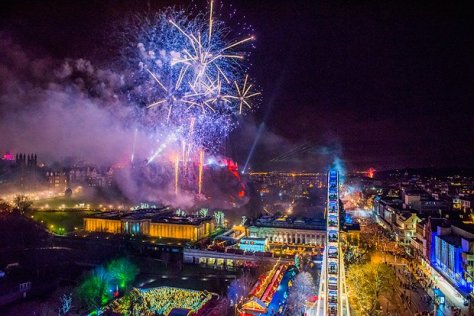
Edinburgh’s Hogmanay is massive and spectacular in many ways, stretching the full mile of Princes St. The Gardens of the East End and the gardens of the Westend. The Bustling market on The Mound. The Waverly Stage, built at the Junction of Cockburn St and Waverly Train station. (Its always been a wind tunnel and it was baltic) The Castle Street stage with massive sound system turning the street into a nightclub with visuals projected onto the walls of the buildings, that was really cool. The East End Stage with an equally punchy sound system. that was to house the very brilliant Colonel Mustard And The Dijon Five.
 I had arrived early so that I could take it all in, I headed into The Westend Of Princes Street Gardens and the main stage for The Concert In the Gardens, I listened to the sound check of Edinburgh’s own Nina Nesbit.and meditated under a tree. The arena was still empty and the revellers were still to arrive, this was also very cool. I was using my reviewer credentials to full effect. The plan was to see Colonel Mustard And Dijon 5 and then The Human League. Which was the schedule I had been given. I was walking back to Waverly and on one of the big telly’s it said The Human League 10pm on The Waverly stage and Colonel Mustard and The Dijon 5 also at 10pm on The East End Stage. Divine was a torn girl and The Eastend Stage was 3/4 of a mile away from The Waverly Stage I realy really wanted to see both bands. What to do, what to do.
93608335.jpg.gallery.jpg
 It was cold it was damp, but the sky was clear and the near full Moon bright in The Heavens above shone its Supermoon beauty. The Castle illuminated a lilac glow. A majestic fitting backdrop. But bye eck it was parky. So I made a compromise with myself. Get down to The Waverly Stage and get a good position. The Human League have been in my life since I was about 13. I have always loved electronic music and The Human League were the God fathers of Electro and Phil Oakley influenced my style aesthetically. Making Men look fit in make-up and they are from Yorkshire. So to not have been there would have been just plain rude.
 The only way to ensure prime position at gigs as well subscribed as this one is to get there an hour before. The Waverly Arena was filling up. So I found my spot and looked at The Clock on the Balmoral Hotel, Bugger. 40 minutes in this wind tunnel. The stage itself with the back blowing free in the wind, revealing the Gothic splendor of Cockburn St. I couldnae help thinking that this was an uncomfortable Gig. I had been on feet for four hours, there was absolutely no where to sit. My old hip was nipping. Luckily I had my big cashmere black dress coat on, so was well cozy with sufficient layers to fend off the deepening chill of the Winter night air.And the only way to warm up was to dance. I looked behind me and 1000’s of people were anticipating the retro boogie that was coming. The minutes soon flew by. And Sacred Paws, a young soulful collective of rhythm and Blues. One could feel how appreciative they were to be playing that stage. Aye Very Very Cool. A lovely warm up.
the-human-league-LST266775.jpg
Then the white synths were unveiled, and an excitement rippled through the arena as the keyboard players took position and Love Action was the opening tune. Joanne and Suzanne came on stage wearing skimpy black dress’s. The bitter wind was howling in gusts of ice. I couldn’t help thinking, aye Yorkshire lasses are built of tough stuff. The Audience went mental as Phil took to the stage wearing a plastic man dress, that at once made me think “Is that a good look?” bitchy I know, its a Yorkshire New Romantic thing. The boogie was on. The sound production as on all of the stages was fantastic and there was no soundclash at all. The Human League played a greatest hits set with a nod to Jo Callis who collaborated on the production of Dare and was part of the band at its most celebrated time.He also wrote The Human Leagues best known song. “Don’t You Want Me” It would have been nice to see him on stage with his old band members and he is a Local lad.
I have seen The Human league many times and in places a lot more welcoming than this one. So every tune I knew by heart and so did the audience. Boosting everyone’s spirits. The encore drew me back as I was heading to grab some of The Mustards Debut Hogmanay performance. The opening synth licks of my fave. Being Boiled. I was hooked back in. Groovy boogie. I tore myself away during the last number, Electric Dreams. Which technically isnae a Human league tune. But everyone loves it.
street-party-cr-chris-watt-dsc-9245-1_thumb.jpg
Colonel Mustard & The Dijon 5 are a band that Divine champions most highly having watched them on many occasions. They are mainstays of the festival circuit and for good reason. In Scotland, they have played almost every one going. Eden Festival, Kelburn Garden party, Knockengorroch World Ceilidh, Electric Fields, ButeFest, MugStock, Rockerbie, Deoch an Dorus, Scribblers Picnic, Doune The Rabbit Hole, Jocktoberfest, Linkylea, Stereofunk, Brew At The Bog, XpoNorth, T In The Park, Belladrum Tartan Heart Festival, Party At The Palace, March Into Pitlochry, and Audio Soup have all been sprinkled with their unique brand of anarchic Dijon Mustard mayhem, mirth and merriment. Their talents have even taken them on an epic journey to South Korea to be one of the Zandari Festa highlights in Seoul and, reciprocating the love and affection shown to them on the other side of the globe. they helped two bands from Seoul, Wasted Johnnys and 57, secure gigs and a festival slot in Scotland. 2017 saw them play their biggest audience to date with 9,000 6th Dijons (their fond name for those who come along and support and party with them) at the Belladrum Tartan Heart Festival in August and a trip south of the border to arguably one of the greatest festivals around at Boomtown Fair.
Joining them on stage tonight were other rising stars of the Scottish music scene in Mark McGhee (artistic entrepreneur and Girobabies/Jackal Trades frontman), Jay Supa (lead singer of SUPA & Da Kryptonites) and Glasgow based MC David KayceOne. Edinburgh’s Hogmanay was treated to a Scottish super group and, yes, the capacity audience filling out Prince Street from side to side and back to front went mental for it! Will David “Dijancer” Blair go down in history as the only person to “crowdsail” on a Dijunicorn down the East End of Princes Street? We think so!
After Colonel Mustard, I headed to the much more conducive environment, the Party In The Gardens to capture The Rag And Bone Man’s headlining performance. I was lucky enough to have access to the press pit. with space to boogie and prime position for the perfect viewing experience. It was a performance that blew me away. This guys voice is superhuman a bit like the male version of Adele. At Midnight the Fireworks started. The most spectacular firework display and the conditions were perfect for it. A clear night sky with a bright near full Moon. Brilliantly choreographed to the music of The Isle of Skye band. Niteworks. Who composed a fitting House, pumping masterpiece Ear candy and eye candy to the max. And to be directly in front of the Castle in the Gardens. it was nothing less than fantastic. a truly majestic experience. Then the Rag And Bone Man, came back on stage and delighted his audience even more. Bringing to a close a first experience of why this is the biggest and best Street Party in the World.
Reviewer : Mark ‘Divine’ Calvert

Hear and Now – Scottish Inspirations

1200px-Gokstadskipet1.jpg


Glasgow City Halls
December 9th, 2017


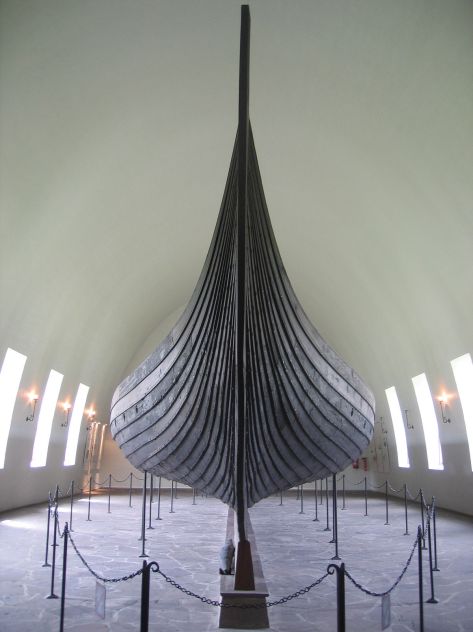
Another free concert and another great treat. Two of the featured composers were born in Glasgow, three were in attendance, two of the pieces were BBC commissions and three were world or Scottish premieres. The Gokstad Ship by Aberdeen born John MacLeod was inspired by a Viking ship in a museum which had previously lain buried in Norway for around 1000 years. At his composition’s climax its beautiful keel could easily be imagined, cutting through the spray on a fine morning, even though MacLeod envisaged the journey being to the Viking underworld. Throughout the work, conducted and unconducted sections alternate. To me this evoked the fine balancing involved both in boat building and sailing. Also the uncertainty of where now the boat really exists – in the past or the present, in reality or in myth?

Myth and ritual ran all through the final work, Beltane, by Anna Clyne, with its long programme note describing the Beltane Fire Festival events which take place in Edinburgh every year, around which the music was composed. There was great charm in the second movement, as the piece progressed through changing lighting colours and the recorded sound of birdsong. This allowed emotional engagement, whilst the first movement had left me impressed but somewhat uninvolved.  The triumphant end certainly hit a sweet spot in every way and demanded a rousing cheer. Hopefully someday Beltane will be performed in a context which directly involves live dance, film or fireworks to help the grandness of this music truly to come to life. Then I’m sure the cheer will be unstoppable.

Oliver Knussen was one of the composers born in Glasgow, though his family left soon afterwards. His Symphony no 3 is listed by the Guardian as one of the 50 greatest symphonies ever written, and as soon as it began one was aware of its compelling urgency. Here was a living musical world being presented to the audience. It had somewhere musical to go, and it took the audience with it.  In order to explore the destination and fully enjoy the trip, repeated listenings are needed, and at only about 15 minutes, this is perfectly possible. As with the other concerts in the series, the whole concert was recorded for Radio 3 and will be broadcast, and made available by the BBC in February 2018.

If a symphony involves creating and presenting a musical world, then a concerto is more about dialogue. William Sweeney’s concerto involved internal dialogue as well as interplay between orchestra and soloist. Brilliantly played by Yann Ghiro, it was intriguing and personal, with the clarinet encountering and incorporating ceòl mòr, jazz and romantic classical music. These musical styles, apparently so far apart, found their way together and the concerto made complete expressive sense. At one point the whole string section, on a strummed pizzicato seemed to taunt the soloist – perhaps to get him to come up with a ‘tune’? (And how often do people who otherwise completely accept the ‘modern’ in art or poetry, have difficulties with ‘modern’ music?) Thinking about the whole concert, conducted by Thomas Dausgaard, I enjoyed The Gokstad Ship the most at the time, but most look forward to hearing the Knussen and the Sweeney again. (By the way Sweeney was the second of the concert’s sons of Glasgow, having been both born and educated there.)

Reviewer : Catherine Eunson

BBC Scottish Symphony Orchestra: Kozhukhin plays Tchaikovsky

Denis Kozhukhin

Glasgow City Halls

Nov 30th 2017


Take any class of schoolchildren (not that last night’s near-capacity audience contained more than a couple of kids); say from p5 upwards, and ask them what leads an orchestra. The answer might emerge, ‘The conductor’s baton’. Continue, in teacherly style, ‘But what leads the conductor’s baton?’ ‘The composer’s score? The conductor’s musical skills?’ Yes and yes, but the best answer might also mention the conductor’s ears! Throughout last night’s wonderful concert Alexander Vedernikov’s listening often seemed almost to physically lead the sound, ensuring entries blended in so that the story of the music could best unfold. Vedernikov showed himself to be a great story teller, and what marvellous stories Tchaikovsky and Shostakovich had given him to tell!

It was just the sort of night which might inspire a lifetime’s enjoyment of the sound of the symphony orchestra. There really wasn’t a dull moment, and after countless highlights (including an encore in the first half) the music ended with much cheering. The City Hall’s acoustic helped considerably, and I have to again mention it; one was constantly aware of being in the same room as every sound, whether it be a lyrical flute solo over pizzicato strings, or the terrifying dynamism of the orchestra at full pelt, loaded up with and deploying tam-tam, cymbals, bass drum, tympani, snare drum and tubular bells. You don’t get the sort of excitement I’m talking about in a recording, and as I’m writing this I’m wishing I could hear all of it, all over again. (It will be on, in Edinburgh’s Usher Hall on Sunday 3rd Dec 2017 at 3 pm.)

https://www.youtube.com/watch?v=g9lo9ZDYuDU&feature=youtu.be

The attentive audience was thrilled (despite one sniffy comment I overheard – there is an attitude, best ignored, that you will always get), and went out for the interval, several voices humming the tunes almost involuntarily. Then came the Shostakovich. His symphony 11, subtitled ‘The Year 1905’ is really quite extraordinary. Very briefly, it was ostensibly based on the 1905 massacre of unarmed citizens of St Petersburg by Tsarist troops. But it was actually composed the year after the brutal suppression of Hungarian uprising of 1956. The story goes that one lady at the premiere said, ‘That wasn’t people being shot, that was the tanks rolling in and people being squashed.’ When relayed to Shostakovich he acknowledged the accuracy of the observation. In truth the reason that the symphony was able to face in two directions simultaneously is because of the terrible engaging dynamism of the theme of war. Instead of being sent to prison Shostakovich received a Lenin prize for composition. But the music isn’t too much, is not unpalatable. Children would like it, and I really wonder why there were not more young people there. There were a good number of students, but surely music teachers, tutors, musicians, parents, all those involved in the whole business of instrumental education can’t think that such musical experiences are unimportant? On the upside it only takes one such concert to be remembered for a long time. But this was one of the really special ones.

Reviewer : Catherine Eunson

Julie Fowlis & Session 9

_Horsecross-prods-0093-full-1505998584_0.jpg


Perth Concert Hall
24th November 2017


Two of the finest acts in traditional music came together for a spectacular evening of Trad and Gaelic music and song at Perth Concert Hall. Both Julie Fowlis and Session A9 were making a very welcome return to Perth, having performed as part of Perthshire Amber Traditional Music Festival in past years.

Session A9, a Trad supergroup if ever there was one, opened the evening with an eclectic set from an extensive catalogue of contemporary and traditional pieces. The opening set of “Wedding Polkas” promised a taste of the truly devilish fiddle-playing to come from Charlie McKerron, Adam Sutherland, Gordon Gunn and Kevin Henderson. These guys play with all the energy of a storm force ten and as tightly as any classical quartet. When slowing the tempo for a rendition of the exquisite “Sleeping Tune,” a piece written by the legendary piper Gordon Duncan, the band had the emotional range of a full symphony orchestra. A fine performance of Jackson Browne’s “These Days” let vocalist and guitarist Marc Clement shine out with a wistful voice that suited the song perfectly. On another Gordon Duncan composition, “Bellydancer” the syncopated rhythms of Brian McAlpine’s electric piano playfully shimmied between some blisteringly hot fiddle and guitar playing.

The traditional tunes like “The Miller of Drone” had a rag-time makeover at these fiddlers’ bows, giving them a freshness and feeling that these guys love what they do as much as the audience loved listening. My own feet couldn’t keep still all night!

Julie Fowlis is an artist in a class of her own. Her reputation as both a curator of historic folk songs from her Hebridean home and a contemporary singer-songwriter, pushing the edges of Traditional music into new territory, has earned accolades from the traditional music scene as well as admiration from mainstream artists like Bjork and Radiohead. Her voice has an absolute purity and a velvety smoothness that makes of the mainly Scots Gaelic songs a beautiful soundscape, so that language comes second to feeling the magnetic pull of her voice. She has the power to transport you to the islands and hills, to hear the sea toss and the wind blow over the dunes on some remote and wild island. The opening “Oran an Roin” (Song of the Seals), with Julie singing unaccompanied, sent a shiver down the spine. Her voice enveloped the concert hall with an otherworldly air.

fullsizeoutput_6d.jpeg

Julie was joined by Éamonn Doorley and Tony Byrne on guitars, and Duncan Chisholm and local artist Patsy Reid on fiddles to perform songs from her new album, “Alterum” which sees Fowlis sing in English (and Galician!) for the first time. The beautiful “Go Your Way” and “Camariñas” (a traditional Galician folk tune) showed such purity and innocence, with understated accompaniment that only highlighted the strength-in-softness of Fowlis’ perfect phrasing. A Gaelic rendition of the Beatles’ “Blackbird” (Lon-dubh) again displayed how international the scope of Celtic music can be in the hands of an artist like Fowlis.

https://www.youtube.com/watch?v=ZTN0FNpvGWE&feature=youtu.be

A warmly appreciative audience had the opportunity to join in some Gaelic singing – which actually sounded rather good! Perhaps it was the excellent sound engineering of the venue. Fowlis is a rare talent in a musical landscape already heavily populated with great female interpreters of traditional songs. If you get a chance to hear her sing live, grab it!

Reviewer : Mark Mckenzie


RCS Symphonia

RCS-Stephenson-Halll.jpg


Stevenson Hall, Glasgow
16-11-17


Why write about a concert which has already happened? Play, literature or film reviews might help you to choose whether to buy a book, or attend a performance. But concerts are usually one-offs, so recommendations are surely less important than impressions. Here are some thoughts, then, on the inaugural performance of the RCS Symphonia, when Bach’s Suite in D No. 3 and Richard Strauss’ Metamorphosen were performed in Stevenson Hall.

I wasn’t expecting to find the Bach so engaging and enjoyable but it really was light, tasty and fizzy, with David Watkin constantly adding air into the mix and encouraging thought and direction into the positioning of each next entry. The famous Air (Hamlet cigars) showed off how special long notes can be if they are given the salt of direction rather than the sugar of vibrato, indeed the whole work showed off a wonderful silvery tone, without any vibrato at all being used. Though there was a wonderful sense of dance throughout, and no doubt because of that, I particularly enjoyed the final chords of each movement which were level and true as horizons at sea.

Metamorphosen for 23 solo strings could not have been more different. It was written in 1945 when the war Germany started had destroyed most of what Strauss must have held dear. The plangent late romantic string sound of the work is so beautiful, I’m tempted to say I could listen to it all day, but in fact I was ready for it to end when it did. The live experience was marvelous, however, and such was the richness of the musical texture that it was good being able to watch as well as to listen.

There was a casual vibe in the hall, mostly filled with students and staff from RCS, and it was a short concert at a time of night when neither work nor transport should be an issue. So, to contradict my first point, if you see the next one being advertised – keep the date free and go along!

Reviewer : Catherine Eunson