Beethoven : Missa Solemnis

 City Halls, Glasgow

May 10th, 2015

Beethoven composed his first of two settings of the mass in 1807, but Prince Nikolaus Esterházy, who had commissioned the Mass in C Major, humiliated the composer in his reception of it, and Beethoven, on the receiving end of a condescending comment by the prince, left his house in a fury. It took him fifteen years to tackle another setting – the Missa Solemnis, four years in composition, and written when he was at the height of his powers. The Mass in C Major (setting aside the prince’s churlishness) has a direct and positive emotional appeal, but the Missa Solemnis is one of the wonders of the musical world, and only its challenges at all levels and for all those involved perhaps prevent it from being performed more often. The performance I attended featured The City of Glasgow Chorus, The Orchestra of Scottish Opera, and four soloists with connections to the Royal Conservatoire of Scotland. They were conducted by Bartosz Zurakowski.
My first encounter with this music was in the recording of von Karajan conducting the Berlin Philharmonic and the Vienna Singverein, with Gundula Janowitz, Christa Ludwig, Fritz Wunderlich and Walter Berry as the soloists. A formidable basis for any comparison. But, in fact, this assisted me in shaping my response to the performance in Glasgow. What do we look for: technical perfection or something that moves us? Truth or Beauty? Sometimes we can catch a portion of both. In this concert, everyone’s commitment to the piece was evident, and if there were any points over which the purists might come in, the way in which Beethoven’s great continuities were allowed to unfold, and the manner in which the music came through to affect us, compensated fully. For me it was deeply moving.If my familiarity with the piece partly prompted that, then I can only say nothing interfered with it either.

All sections of the choir put everything into their responses to the conductor and the score; members of the orchestratoo handled well the varying demands of the piece (drive on the bassoons!), and the ensemble work – as in the snappy conclusion to the ‘Gloria’ – was often very impressive. A special word for the soloists. Charlie Drummond (soprano) had range and dynamic to carry all that was required; sometimes (remember I have Janowitz at the back of my mind) her voice soared with a true and piercing tonal quality. Jane Monari (Mezzo) had beautiful control and warmth in delivery. Matthew Morgan (Tenor) had a lot to put across, and responded really well; the voice of Jonathan Forbes Kennedy (Baritone) is rich and pure, and will gain resonance as it develops. Their work together, as in the striking opening to the ‘Agnus Dei’, underlined their special quality. In fact all these singers, essentially still at different phases in training, will gain from the experience, and the belief that we will get more from all of them is really cheering. Their sensitivity and musicianship is already established. Their vocal contribution (generously acknowledged at the close by the conductor) was central to our enjoyment of the piece.As was the contribution of Bartosz Zurakowski himself. The choir rose to him in tribute at one of the curtain calls; clearly the work they had put in with the conductor(and with their musical director, Graham Taylor) was fully appreciated. Glad I was there to hear it.

Reviewer : Mr Scales
Mark Morriss

Eden Court
Inverness
Fri 8th May
markposter-A3-410x410
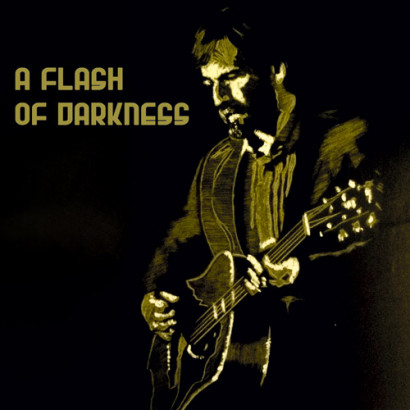
Performing at Inverness , Eden Court, Mark Morriss gave an entertaining evening of guitar and humour. The previous front-man for the Bluetones that shot to fame in Brit Pop ninties, gave a truthful performance. No pretence or egos in sight just Mark and his guitar. Sharing stories and personal opinion Mark does not take himself too seriously, and fame has had little effect. Opening with his own track,’its hard to be good all the time’ from 2nd solo album ‘a flash of darkness’ Mark eased into his set of Bluetones hits, solo work and interesting covers.
Mark-Morriss5
Interacting with the audience is second nature to Mark, as he laughs at the local MP, Inverness ‘gentlemans club’ and old crooners in the next auditorium. As he chooses each tune seemingly on a whim we hear ‘Space cadet’ and ‘Consuela’,, also from his 2nd album. Bluetones hit ‘Bluetonic’, ‘Slight Return’ and ‘The Fountainhead’ mixed with an emotional Scott Walker cover ‘Duchess’. Marks rendition of East17’s ‘Stay Another Day’  with comical lyrics is a note-able track to Youtube.
Mark now has two solo albums (Memory Muscle / A Flash of Darkness) and is set to go back on tour with re-formed Bluetones in Autumn this year. Also currently playing in The Maypoles Mark seem to have a lot  more to give. An enjoyable and humorous evening had, I’m sure there is a long career ahead for this performer.
Reviewer : Stephanie McDaid

Scottish Chamber Orchestra: Barber Violin Concerto

City Halls, Glasgow

May 1st

The Scottish Chamber Orchestra, conducted by Joseph Swensen, who has a long and distinguished association with the SCO, gave us four compositions from the 1920’s and 30’s in a concert that brought out genuine enthusiasm in the audience, whoproduced a spirited response at the close. (‘This is not Edinburgh’ my companionsaid, as she sent a couple of piercing whistles across the length of City Halls – enoughto make the guy immediately in front duck down for cover.)

Stravinsky’s ‘Concerto in E-flat ‘Dumbarton Oaks’, with its links to the Brandenberg Concertos, made a good start: it has a nice sway and bounce initially, with the discordancies contributing to passages of cheerful progress, and the hinted baroque elements are modernised into similar positive advances and shifts in sonority. The fifteen players (flute, bassoon, clarinet, two horns, ten strings) chimed and combined on every requirement – from elegance to mischief – and always with warmth and lyrical ‘body’ too.

Benjamin Britten wrote ‘Variations on a Theme of Frank Bridge’, to be performed by string orchestra, as a tribute to his former teacher, and each section was written to reflect and acknowledge elements of Bridge’s character – including integrity, charm, energy, humour, sympathy, skill – elements which in fact characterised not only this piece but the concert as a whole. The SCO pitched right into this, Swensen showing some neat Qi Gong flourishes to take it through all the necessary transitions; though, as we discovered in the second half, when he became solo violin, the discipline and responsiveness of the orchestra thoughout could only be down to clear and careful work in rehearsal.

I lost track a bit in following the proper order of Britten’s variations – there is a great thematic mix, what with marches, a ‘romance’, an aria, a bourrée (a speedy French dance), a waltz, a fugue, and so on – but this had no effect on my overall enjoyment of the piece. At each point the SCO responded with the skill and subtlety required. There were good, rumbling openings with double bass and cellos working hard; there were swelling violins and violas, with pizzicato too, and chittering, high energy.

Through headlong passages things tumbled and sliced or slowed to an end. At one point there was a lovely ‘wakening’ effect: almost like yawning and stretching, with a slow, careful mustering of energy that never quite breaks out, before the whole thing rolls over and goes back to sleep. In the ‘Fugue and finale’ there is a melodic line that builds with promise and moves into beautiful elegaic passage like the Adagietto from Mahler’s 5th, then gradually diminishes before the brief flourish that ends the whole piece. Scintillating stuff, and it made for an exciting first half.

Joseph Swensen had himself orchestrated Prokofiev’s ‘Cinq Melodies, Op 35a’: they were originally ‘five wordless songs’, though Prokofiev transcribed them later for violin and piano. The commitment from all the players (considerably reinforced for the second half) was still there, and some of the elements that had already been on display were reinforced: rapid shifts in mood and tone, a variety of motifs and melodies, ‘eastern’ features adding interest, lyrical flourishes; but for me the mix in Prokofiev was not as attractive as in the earlier pieces, and my attention drifted a little about two thirds of the way through. Swensen was energetic in his playing and conducting – featuring some encouraging wafts with the bow, or a free bare hand – but this piece was less engaging for me than the other programme selections.

Differences in personal preference and some interference by a middle man, along with maybe a failure of imagination by those involved in its commission, meant that Barber’s Concerto for Violin and Orchestra Op 14 didn’t really have a happy start. But when it was premiered under different auspices in 1941 it was an immediate success. It was obviously a main piece for Swensen, and his presence was galvanising in centre stage. Freed from the score he had needed for the Prokofiev, his stance was more open to the audience, and in the expansive start to the composition we could see his relation to the orchestra was more potent too.

It was glorious to hear the full range and force of the SCO in some of the grand, dynamic passages – and to enjoy the more twinkling brio bits too. Though I didn’t relish the suggestion of a type of ‘Scotch’ melody that crept in from time to time towards the end of the first movement. The second movement, andante sostenuto, has an unexpected and beautiful opening theme established by solo oboe which is contrasted, then echoed, by the solo violin. A key feature was the way the strings and the woodwind and horns combined and offset each other; and Swensen’s playing, especially at the end of the movement, was very fine. The third movement, delivered as prescribed presto in moto perpetuo, guaranteed powerful darting energy from the outset, and was driven through with a clear onrush to its bravura conclusion. As I said earlier, the audience then came in promptly to convey how well, and with what satisfaction, they had been swept along.

Reviewer : Mr Scales

The Chicago Blues Brothers

Edinburgh Playhouse
2nd May 2015

Layout 1
Subsequent to their triumphant international Sweet Home Chicago tour, The Chicago Blues Brothers return to the UK with a spanking new show!  The Blues Brothers (1980) was directed by John Landis and the star-studded production (John Belushi, Dan Aykroyd, Carrie Fisher, John Candy, James Brown, Cab Calloway, Aretha Franklin, Ray Charles and John Lee Hooker to name but a few) is now considered a cult classic. The UK Blue Brothers Tribute Act review the much-loved movie over two hours performing Blues, Soul and Rock ‘n’ Roll.

Welcomed on stage by the reverend ‘Cleophus James’ (James Brown’s character in the movie), Chris Hindle as Joilet (Jake) Blues and Gareth Davey as Elwood Blues, identically dressed in black suits and ties, with pork-pie hats, white socks and sunglasses, started things off with ‘The Boys Are Back In Town’.  The audience greeted the Blues Brothers with enthusiasm.  The stage backdrop showed a Chicago cityscape.  Supporting the brothers was an immersive 7-piece live band and two backing singers in sparkly LBDs.

Although the boys made light of it, the show suffered a bit due to the fact that Elwood was from Leeds and Jake from Bradford with both slipping from poor American to Yorkshire accents throughout the show. ‘Hard to Handle’ proved to be well named as it was talked through, in a Bradford accent, rather than sung with any conviction. The show started a little sluggishly but thankfully it picked up as the night progressed.

The true Blues Brothers were known for their impeccably synchronised dance moves; unfortunately the tribute act just could not quite pull it off.  The dancing was mediocre and unpolished including the efforts by the three lads in the horn section. Between songs the duos banter created some laughs, such as when singing ‘Raw Hide’ the brothers played piggy back with amusing consequences. The patter however sometimes fell into Bultins red coat territory, red coats in black suits, I suppose? The brothers reenacted parts from the film, although at one point I think even the lighting technician fell asleep, as the band were plunged into darkness in one of the comedy fillers!  Jake quickly gained control of the situation and made it into a joke about his weight, claiming “I wouldn’t mind but how can you miss me”?!! At one point in the show Jake turned to the audience complaining that all women were trouble. Cue one of the backing singers stepping forward to confront Jake with ‘Think’ by Aretha Franklin, marking the moment where the energy lifted!  Subsequently Elwood appeared dressed in a white suit to sing ‘Minnie The Moocher’, a number guaranteed to spark audience participation. Elwood proved to have the better voice of the two and played a decent harmonica. Jake’s vocals often fell short of giving the material the rough and ready justice it required, but he held the key and with an eager audience to sing along, the songs were on the whole enjoyable. Largely helped by the excellent backing band. As the film quotes “We had a band powerful enough to turn goat piss into gasoline.”

After the interval the band returned and the backing singers exhibited red glittery dresses. Clearly the intermission drinks break helped relax a few of the audience, as we witnessed some standing up dancing and singing in their element during most of the second half.  Many die-hard fans had gone to the effort of wearing pork-pie hats, sunglasses and suits accompanied with inflatable saxophones!  ‘Shake Your Tail Feather’ got almost the entire audience up and dancing doing the monkey and mash potato!  The night ended on the feel good song ‘Your Love Keeps Lighting Me Higher’.  “What a night… what a party… what a show!”

Reviewer : Sarah Lewis

Blueflint

Eden Court – Inverness
Sat 25th April 2015
*
Blueflint_InstrumentsHR-e1366283749607 (1)
 *
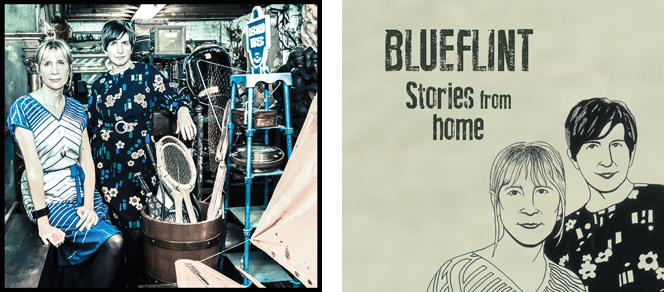
Blueflint are an Edinburgh five piece band with style, lead by the very talented ladies Clare Neilson and Deborah Arnott. The pair begin both playing banjos, backed by drums, double-bass and fiddle…..we begin with ‘Light In The Window’ from their second album. This folk band have a real Scottish feel to them , brimming with beautiful lyrics and harmonies.
*
home-image (1)
 *
Really enjoyed the upbeat tracks from the new album ‘Stories From Home’ but was left feeling less than enthused after a few of the slower tracks. These two ladies obviously have a very strong friendship which is lovely to feel part of. They reminisce together on stage of first learning banjo and various nights of fun. Ober talented these two switch from Banjos to ukulele, to keyboard, to electric guitar with each tune. ‘ What if I Dont Want To?’ got me dancing in my seat along with ‘Seasons Are Changing’.
*
*
If Scottish /Indie/Folk is your style put Blueflint on your download list, better still go see them! there are big things expected for this five.
Reviewer : Stephanie McDaid

Kris Drever And Boo Hewerdine

The Fallen Angels Club

CCA, Glasgow

24/04/2015

P1000965

Some combinations just work. Kris Drever and Boo Hewardine are a match made in heaven in both their well judged vocal harmonies and interweaving acoustic guitar playing. Kris Drever’s main band is the award winning folk act LAU, while Boo Hewardinehas been on the music scene as a songwriter and performer for many years and is a regular in Eddi Reader’s road band. They treated a sell-out audience at The Fallen Angels Club promotion in CCA to two sets of sublime and varied music, there wasn’t a slack moment.

Kris Drever opened proceedings with two solo numbers-his voice and guitar playing were impeccable and he seems to be ever-developing as an impressive artist in his own right. Boo Hewardine joined him on stage for the third number “I Didn’t Try Hard Enough” which showcased their Harmony vocals and Kris Drever’s deft lead acoustic work. In between songs their wit and repartee entertained the audience, with much fun being had at their respective age difference among other things.

More Boo Hewerdine songs followed, both the Bonnie And Clyde inspired “Blaze Of Glory” and the atmospheric “Dragonflies” being standouts and he finished the first set with a fine solo version of the Bee Gees classic “I Started A Joke.”

The second set was as varied as the first, Copernaum, a poem by Lewis Spence set to music by Ed Millercame across powerfully, as did Boo Hewardine’s “Liar’s Dice,” a scathing indictment of the banking industry. The set ended with a stirring audience sing-along of “Patience Of Angels”- Eddi Reader was in the house helping the crowd along.

Kris Drever returned to encore “Harvest Gypsies” and was rejoined by Hewardine for a gospel tinged “Sweet Honey In The Rock.” All in all a night of quality music performed by two artists who never fail to convey their love of music and a great song.

ABBA MANIA

Edinburgh Playhouse

 April 24th 2015

unnamed

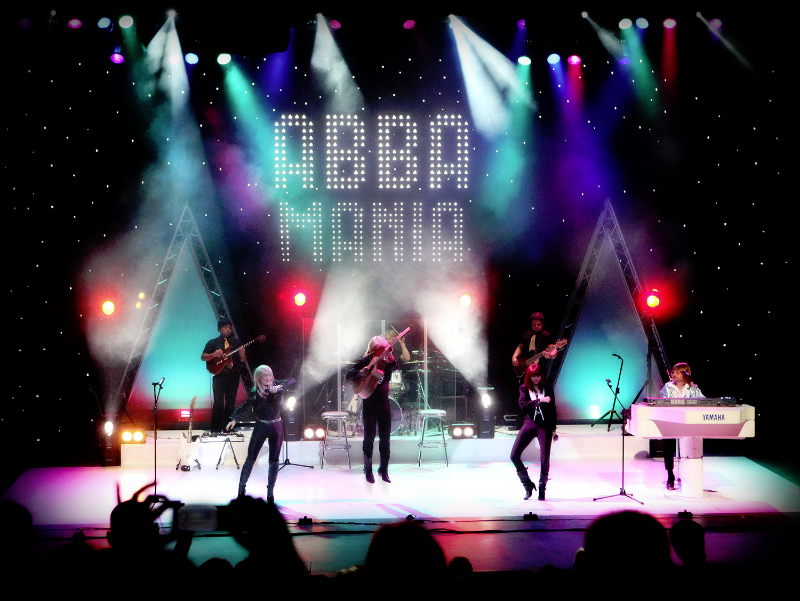
If you have ever heard the real Abba’s music (hasn’t everyone?) then you will know it goes straight for the ‘Happy Button’ in your brain and hits it with a sledgehammer.   I am pleased to report that the tribute band ‘Abba Mania’ certainly didn’t disappoint! The onstage format was simple, with a plain black backdrop, some essential lighting and a no-frills band line-up but the polished, professional and energetic performances of the band more than made up for any lack of visual grandeur.  Naturally the women were the stars of the show and looked like a million Krona in every outfit.  Electric blue disco pants leave very little to the imagination, I’ll have you know, but this ‘Agnetha’ and ‘Anni-Frid’ have nothing to worry about in the flab department..or the camel-toe department…oh, the relief.  Their choreography was perfect and their stage presence undeniable, and there was enough audience interaction to keep even the most raucous hen-party satisfied.  Most importantly, their voices were strong and uplifting- I’d wager they sounded every bit as good as the real thing.

‘Benny’ looked the part but was barely noticeable shielded behind his enormous keyboard, however ‘Björn’ added some welcome comedy to the show, merrily prancing about the stage and looking for all the world like a camped-up, satin version of a Star Wars Imperial soldier, with white, glam-rock knee-boots and a frankly hilarious synthetic wig that had us wiping tears of mirth on more than one occasion.  It was clear that he thoroughly enjoyed every minute and didn’t care who knew it. All the classic songs were there and there were many, along with a couple of slightly dodgy ones that most people had never heard of, but this was clearly deemed an unofficial cue to answer the call of nature by what appeared to be half the ladies in the audience, so no harm done there. If you want an uncomplicated, cheerful night out then you could do much, much worse than ‘Abba Mania’- truly a show for every generation.

Reviewer : Maya Morena

Ingrid Fliter Plays Chopin

City Halls, Glasgow

24th April

images

What is it about Argentina that tends to produce individual performers of such dazzling brilliance? Perhaps it’s something good in the Buenos Aires air (geddit?!) In Football it’s the ‘no.10s’ – Di Stefano, Maradona, Messi. Supremely talented virtuosi, team-players up to a point, but essentially soloists. Their musical equivalents would be pianists – Daniel Barenboim, Martha Argerich and now, Ingrid Fliter.

The 41 year old has built her reputation largely on her mastery of Chopin, and on this evidence boy does she deserve it. Roll over Rubinstein! Hats off Horovitz! Have I gone too far? Perhaps (I sometimes do), but if there’s a better living interpreter of Chopin out there I’d like to hear them. I’d really, really love to hear them!

Poised Panther-like for most of the long orchestral introduction to Chopin’s Piano Concerto no.1 (actually the second he wrote but it was published first), only a slight shuffle and a wipe of the hands betrayed a degree of nervous intention. And it was with a feline economy of movement that she attacked. Feline economy, precision and focused aggression, but also warmth, clarity and a scarcely credible lyricism in the upper register.

The composer meant the slow second movement to “convey the experience when the eye rests on a beloved landscape, which evokes beautiful memories in one’s soul”. In her hands it seemed sadder than that, maybe the landscape had been spoilt with wind-farms, maybe they paved paradise and put a parking lot.

The third movement includes elements of a krakowiak (a dance form native to Krakow). Chopin wrote it as a farewell to his native land which he was shortly to leave behind forever, and that hint of nationalism may have produced a febrile effect at its Warsaw premiere in October 1830. It is not unreasonable to surmise that some of those in the audience were already involved in plotting the uprising against Russian rule which was to erupt just a few weeks later, and was to cost upwards of 40,000 Polish dead and wounded and the last vestiges of autonomy the ancient kingdom still enjoyed.

Sandwiching the fabulous Fliter we had an exquisitely graceful Scottish Chamber Orchestra rendition of Stravinsky’s luscious (and not at all Stravinsky-like) orchestration of Chopin’s A-flat Nocturne, notable as the first of the Russian’s fruitful collaborations (Firebird, Petrushka and the Rite of Spring) with the impresario Diaghilev, and Mendelssohn’s Italian Symphony, taken at an exhilarating pace by guest conductor Jun Maerkl.

Ingrid Fliter’s recordings of the two Chopin concertos with Maerkl and the SCO are available on Linn Records, and the SCO are available Thursday next at the Queen’s Hall for Barber’s Violin Concerto with Joseph Swensen as conductor and soloist, and next month with Swedish Soprano Lisa Larsson for a UK premiere of Martinsson’s Garden of Devotion, and (mouth wateringly) back at the Usher Hall for Haydn’s vocal masterpiece the Creation with Harry Christopher’s (of the Sixteen) conducting.

Reviewer : Tam Heinitz

Mark Olson / Monica Queen

CCA, Glasgow

23rd April

iphone pics 23042015 121

The Fallen Angels Club at CCA was host to a double bill of Scotland’s Monica Queen and American Mark Olson.

Monica Queen kicked off proceedings with a short but very sweet set accompanied by long time musical partner Johnny Smillie, both on acoustic guitar and vocals.

Starting off with the aptly titled “In The Dark” the set progressed through from the heartfelt “Words That Take The Weight” to the closer “When It’s Time To Go.” “One Room House” was particularly affecting with Johnny Smillie providing great harmonies and tasteful lead guitar.

Monica Queens voice has been compared to Emmylou Harris’ but, to my mind, she harks back to earlier artists such as Patsy Cline but without the schmaltz.

Her self-penned country ballads can hold there own against anything you’ll hear from Emmylou Harris or Nanci Griffith.Unfortunately Monica Queen has not gone on to greater things after a long stint with 90’s band Thrum and a long critically acclaimed solo career.

Mark Olson’s main claim to fame is the fact that he was one half, with Gary Louris, of the songwriting team behind ground-breaking Americana band The Jayhawks, however his solo set at CCA showed a more reflective and folky side to his songwriting.

Playing mainly a strummed Strat and occasional dulcimer he was accompanied on harmony vocals, djembe and keyboard by Norwegian wife Ingunn Ringwold. He ran through a 1hour 20 minute set with numbers from The Jayhawks (“Blue”, “Over My Shoulder”), material from new album Goodbye Liselle and from past outings with previous project The Original Harmony Ridge Creekdippers.

Opening number “The Pacific Coast Rambler” was typical of most of the following material, which was much folkier than his Jayhawks tunes. Particular standouts of the set were an impassioned “A Poison Oleander”, “Clifton Bridge” and the encore “All These Games.”

It was obvious that the duo were a tad weary at the beginning of their show and by Olson’s own admission were drained by being on a long European tour. Between numbers some of his observations were rather rambling and eccentric, however as the night wore on they gained in energy to the benefit of the music.

Not a classic performance but interesting nonetheless from a very individual performer.

Reviewer : Dave Ivens

Daimh

Daimh

Sunday 20th of April

Eden Court, Inverness

unnamed

Daimh are a Celtic band that has been on the scene for 17 years. They have been through several line ups, as well as the regular members Angus MacKenzie (pipes/whistle), Gabe McVarish (fiddle) and Ross Martin (guitar)this performance included two newer members of the band; Murdo Cameron: (Mandola/Mandolin/Accordion) and 21 year old Ellen MacDonald (Vocals) .

Opening with a set of three original jigs the band then brought on Ellen who sang the first of 3 songs about a farmer who had turned to drink about. Ellen sang all her songs in Gaelic but I would not let this put off anyone who does not speak the language off’ as her singing is beautiful without understanding the words. The music was extremely well performed and all the musicians showed their talent in changing from one instrument to another with no drop in ability. The original music is of a very high quality and will no doubt be part of the continuing traditional scene long into the future.

When they performed music without lyrics the music was generally more up tempo giving almost two separate performances, but at the end Ellen sang Mouth music (Puirt-à-beul) showing that she could also do happier tunes.  Overall it was a thoroughly good night; my only criticism was that there was no place to dance.

image (1)

If you have never experienced Celtic music before I would recommend being introduced through Daimh, and if you have and enjoy it these are some of the best performers around. They are on Tour In Mull, Skye Uist and Ireland before playing at UNIVERSITY OF ABERDEEN MAY FESTIVAL , on the 29th of May at The Lemon Tree .

Reviewer : Stewart Tonkin

Design a site like this with WordPress.com
Get started